
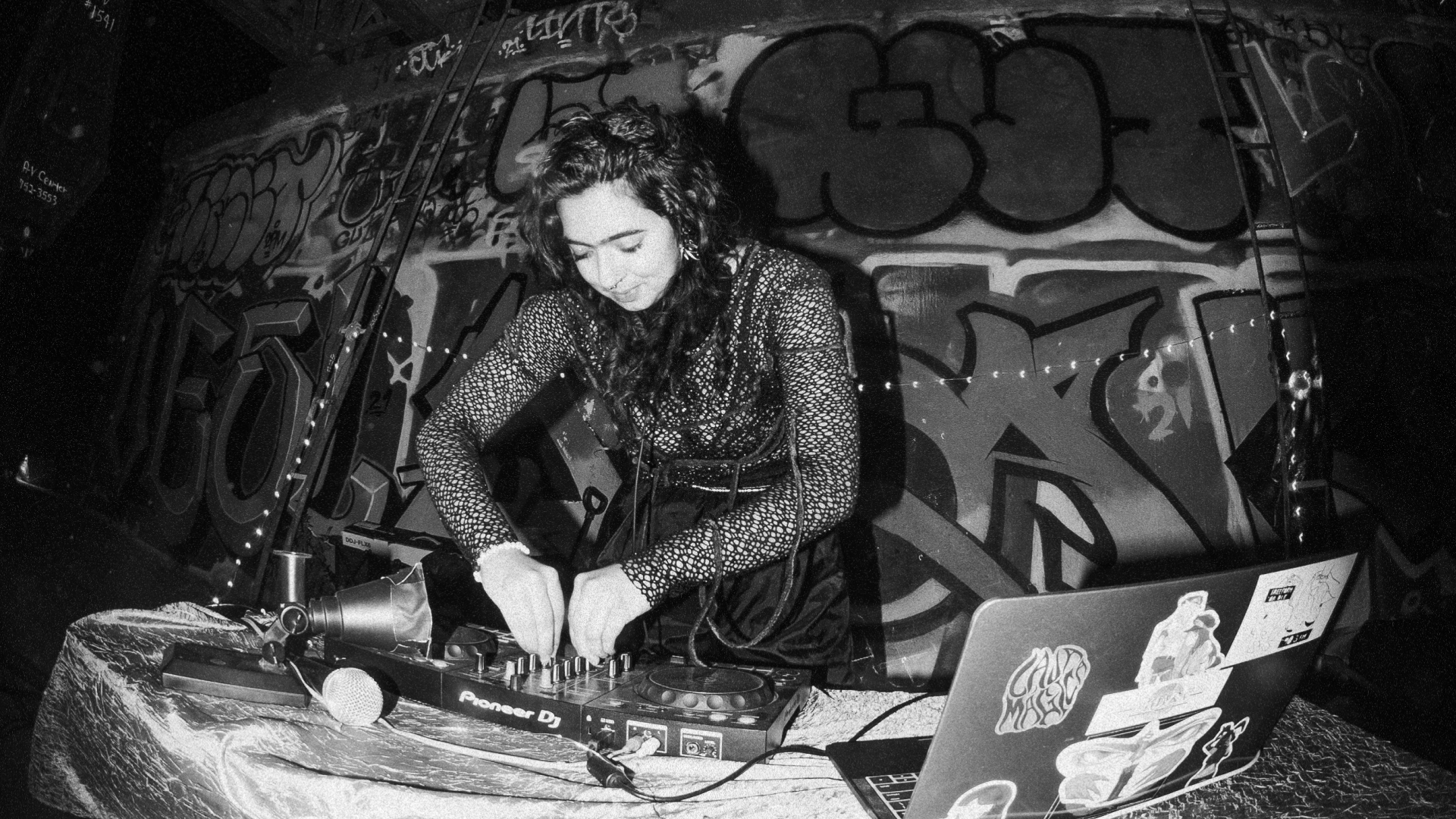
DJ Ari B exists in two worlds at once, yet effortlessly makes both feel like home. The Iranian-American DJ and radio host has built a reputation for moving fluidly between sounds, scenes and frequencies, hosting ‘The Art of Sound’ on Lower Grand Radio and ‘JUKE WRLD’ on Hyde FM. Two shows, two distinct vibes, one guiding sensibility: that music is never just music. It’s culture, memory and conversation compressed into a groove.
In the age of algorithm-fed playlists and skip-happy listeners, DJ Ari B is doing something almost countercultural: building a radio show from the ground up. We caught up with DJ Ari B to talk about their journey, their influences, and what it means to curate not just playlists but entire listening experiences.
Contents
- 0.1 How did your journey with music begin and why did you want to become a radio host?
- 0.2 Tell us about how you got your radio shows on Lower Grand Radio and Hyde FM.
- 0.3 What was it about radio that you really gravitated to?
- 0.4 What would you say are some of the guiding principles of your shows?
- 0.5 Was there a turning point for you in your radio journey that really took it to the next level?
- 0.6 How do you prepare for your shows?
- 0.7 Is there one radio show you’ve done that you think really defines you?
- 0.8 What are some of your proudest achievements in your radio career so far?
- 0.9 What have been the most satisfying parts of building the community around you?
- 0.10 What would you say to someone who wants to present and put together a radio show?
- 0.11 In your view, what do you think the future of radio look like?
- 1 Share this:
How did your journey with music begin and why did you want to become a radio host?
DJ Ari B: When I was 18 years old, I had an interest in curating playlists and mixing rap acapellas with different beats. It was just me and a couple of YouTube tabs open, trying to match the beat. I was studying Chemistry at UC Davis, but the first internship I got was at a nonprofit called Future Development Youth Center in Davis where I was a peer mentor for kids learning music production. The founder, Frank Woods, taught me how to DJ and set up sound, and I quickly fell in love with the craft and found myself ever inspired to share music.
In my second year at UC Davis, I joined my college radio station, KDVS, where I started my radio show ‘The Art of Sound,’ which actually started as an all-vinyl Hip-Hop show. Getting to work with analog gear and physical media gave me a deeper perspective and understanding of what DJing is. During my four years at KDVS, my show eventually became a place of experimentation with music from Southwest Asia and North Africa (SWANA) mixed with club music. I would pull CDs from the electronic compilation and Iran section and mix them together. I found a lot of joy in mixing breakbeats and traditional Iranian folk music. Then, in 2021, I moved to Oakland, CA, and kept the show going.
Tell us about how you got your radio shows on Lower Grand Radio and Hyde FM.
I was looking for DJing opportunities at other radio stations in the Bay Area and found Lower Grand Radio and Hyde FM. I started out as a guest on Lower Grand in Oakland, CA, in 2021, where I played music from the SWANA region. Lower Grand encouraged me to play there again and loved the diversity of music I played. Similarly, I would guest on Hyde FM and play club music like Jersey Club and Ghettotech. Now, I have two radio shows, where I continue ‘The Art of Sound’ on Lower Grand, exploring the sounds of the SWANA region, and co-host ‘JUKE WRLD’ with DJ NEWJUICY on Hyde FM. We highlight sample-based music like Juke, Footwork, Ghettotech, and cross-genres like Baltimore and Jersey Club.
What was it about radio that you really gravitated to?
Radio is a place to experiment and do things you don’t always get to do in a club. The audience is a wide range because it can reach people in other cities and countries, which is so beautiful. I have listeners in the Philippines, Iran, Europe and across the US. Where I never play mainstream music, I’ve always found myself listening to more underground artists and songs, which is also why I love my radio shows. I can play music that is random, weird or unexpected, and my shows are places for me to experiment with different genres, tempos and ways of mixing. I let myself find a flow with the music and lose time with the tracks.
What would you say are some of the guiding principles of your shows?
I try to stick to my genres on my shows and play new music in every show. For ‘The Art of Sound,’ I play music from SWANA artists or traditional music from the SWANA region. I love finding new artists in the region who are creating electronic music with influences of folk music. Some notable artists I love include Fatima Al Qadiri, a Kuwaiti artist; Makan Asghvari, an Iranian artist, and Bergsonist, a Moroccan artist. With ‘JUKE WRLD,’ I explore old and new music from genres like Juke, Footwork, Baltimore Club, Jersey Club, Ghettotech and more. I love digging into the discography of artists like DJ Rashad, DJ Earl, DJ Slugo and DJ Jayhood. My goal is to keep the dance floor moving, so you’ll find my spinning a BPM of 180 or 160.
Was there a turning point for you in your radio journey that really took it to the next level?
Switching from physical media to digital media has been a huge turning point for me. When I DJ’d with physical media, I had more of an experimental process because I was working with a lot of CDs and music I hadn’t actually listened to before. Now that I’m mainly using digital media, I have a wider range of music I can play and tend to stick to precise genres. I focus on creating seamless transitions and building up energy that would drive a dance floor in a club.
How do you prepare for your shows?
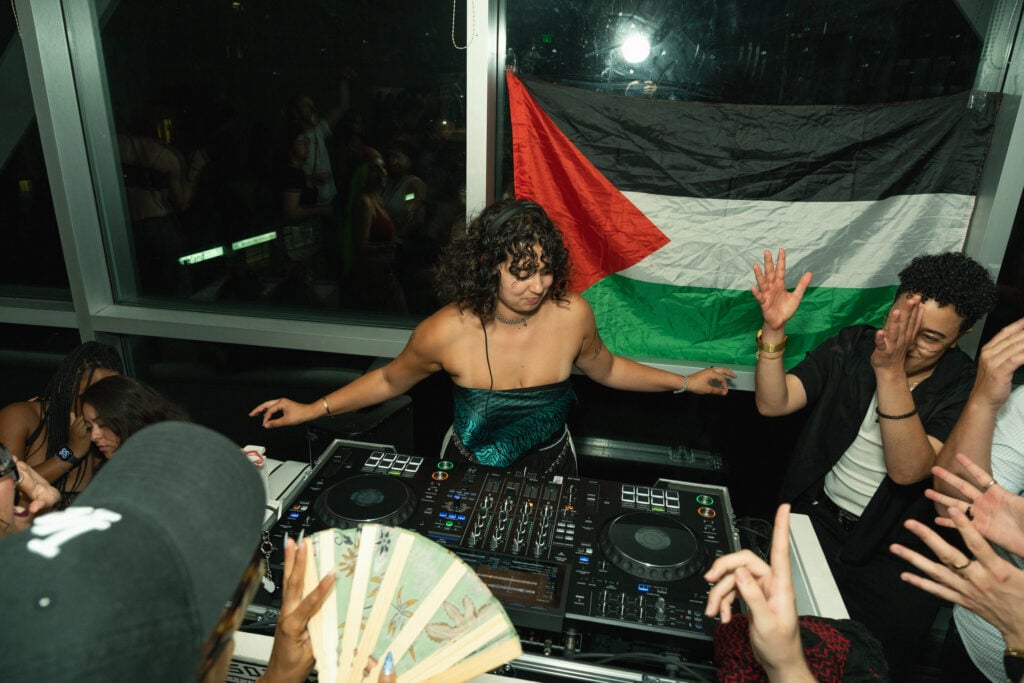
Preparing for my show means a lot of crate digging. I often use the four weeks between shows trying to find new music. Spending a lot of time listening to songs, researching artists, and trying to find both older and more current music within the genres I play. For SWANA sounds, current events always affect how I show up to my shows and what type of music I play. My community also drives me to explore more regional music. My Sudanese, Algerian and Yemeni friends have really inspired me to dig deeper and find traditional and modern dance songs from their regions. I really love learning about the different music traditions of the region and usually look for songs that make me feel good.
Is there one radio show you’ve done that you think really defines you?
I would say my latest radio show on Lower Grand Radio defines me because I experimented with layering Iranian vocals on club beats. Also, I played music by my favorite artists within the SWANA electronic music scene. This mix highlights my love of darker, experimental sounds and harder dance beats.
What are some of your proudest achievements in your radio career so far?
Some of my proudest achievements have been DJing alongside some of my favorite producers that I feature on my shows, like Khadija Al Hanafi, DJ Plead, DJ Earl and DJ Lycox. These are artists I play often because they’ve produced my favorite music and really encapsulate the sounds I look for. I’m also really proud of the music I’ve produced. It’s a huge achievement to play my own music on my radio shows or hear my music being played by other DJs in their sets.
What have been the most satisfying parts of building the community around you?
Hosting shows with my community has been one of the most satisfying parts of my career. Especially bringing in new artists who’ve aligned values and music interests. It brings all of the shows together and connects them to an audience. The focus is also about bringing people together, listening to new music and being on the dance floor together. It’s really a beautiful experience.
“I let myself find a flow with the music and lose time with the tracks.”
What would you say to someone who wants to present and put together a radio show?
Do the research, explore, experiment and follow your passions.
In your view, what do you think the future of radio look like?
Collaboration. For me, I want to collaborate more with like-minded artists and feature people on my shows. I love going B2B with other artists to explore that musical relationship, and I’m excited to bring more people onto my show. I’m also excited to bring my sounds to other radio stations in other cities and meet artists who are doing similar things.