
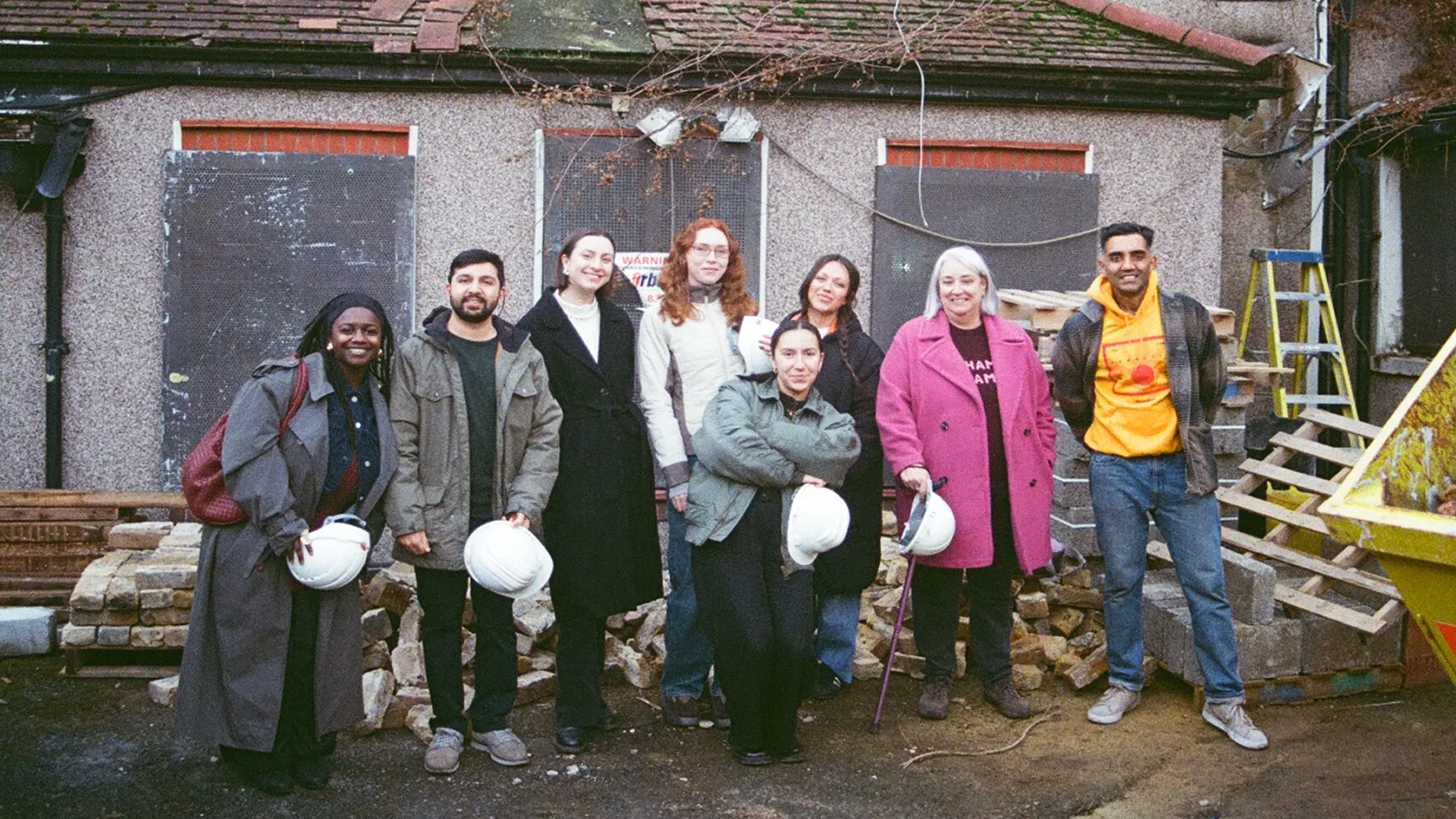
‘Community’ has to be the most important buzzword this decade. One we’ve seen co-opted by brands and advertisers to market whatever they’re selling. But did you know community really is the solution to the future of live music venues?
At a recent panel talk on sustaining grassroots scenes, author and DJ Anjali Prasahar-Savoie dropped a definition of community that really resonated with me. A community is defined by its ownership and decision-makers. “Who’s actually making decisions about what’s happening in there; are the people who bring it to life, actually involved in those decisions?” Anjali asked. “Where is the money going? Is it going back into the community, or is it going to PRS?”
When viewed through the lens of ownership, very few music ‘communities’ qualify as sole servers of the community. But all over the world, music lovers are banding together to take ownership of beloved spaces to save music venues from closing down. In this article, we take a look how cooperatively-owned venues (co-ops) are operating, the long history of these spaces and how big of a part they could play in saving the music scene from a corporate takeover.
Contents
The crisis
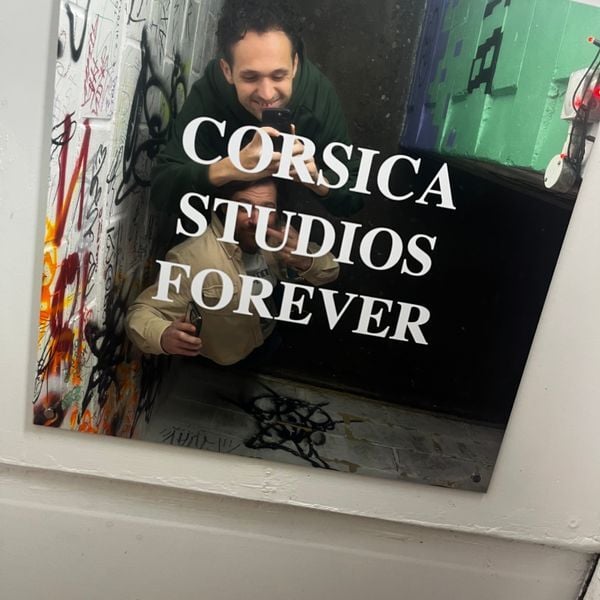
In the UK, one in four UK late-night venues have closed since 2020. That’s pubs, clubs, music venues and restaurants in their thousands. It would pain me to list the places we’ve lost like many already have. However, thanks to the Music Venues Trust (MVT) Report 2025, everyone’s now more aware of the impact this is having. Music venues have had to cut 6000 jobs and still, over half of them are making no profit at all. My local bar in Tottenham, The Post Bar, closed just two weeks ago. Just as many Londoners were still mourning the closure of Corsica Studios.
Every music lover has a story tied to a venue they’ve lost. In late 2024, the MVT stated that over 350 grassroots music venues are at immediate risk of closure. This represents the potential loss of more than 12000 jobs, £250 million in economic activity and over 75000 live music events.
So who’s to blame?
Is it landlords and the price of rent? In Bath, the historic venue Moles (1978-2023), where Radiohead, Oasis, The Smiths, Ed Sheeran, Blur, The Killers, Fatboy Slim and Idles all played, was lost to rising rents. CBGB, in New York (1973–2006), the birthplace of Punk – Ramones, Talking Heads, Blondie, Patti Smith – closed due to skyrocketing rent and disputes with landlords.
Or is it the monopolies taking over the live sector? The MVT’s Mark Davyd called out Live Nation in January for not contributing to the voluntary grassroots levy, unlike SJM, Kilimanjaro and AEG. The levy is a proposed industry-led initiative in the UK to apply a small fee—typically £1—onto arena and stadium concert tickets (capacities over 5,000) to support smaller, independent music venues, artists and promoters. It’s already raised £500,000 from acts like Coldplay and Enter Shikari.
“If the voluntary levy fails, it will not be the fault of the companies who have already embraced it” Davyd said. “It will be a direct consequence of the overwhelmingly dominant force in the arena and stadium market deciding not to deliver a voluntary levy. That’s your choice Live Nation and everyone in the industry hopes you make the right one.” Live Nation holds a dominant position in the UK live music industry, controlling approximately 66.4% of arena, stadium and outdoor concert ticket sales in 2025.
Governmental responsibility
Is the government to blame? One of the easiest things the government could do is provide permanent legal protection for venues from sound complaints by new builds right next door. They call this protection ‘Agent of Change.’ It’s now a principle in UK planning policy but it’s not enshrined in law that property developers planning housing near music venues should pay for the sound proofing their tenants will eventually demand.
The UK live music industry generated a record £8 billion in 2024, so what is being done to protect the grassroots venues who make it possible? The number of venues has dwindled to around 800. A number that could reach 450 easily without the necessary action.
The history
Working men’s clubs
Back in the 1970s, Britain had over 4000 community clubs. Mainly working men’s clubs and co-ops run by their members through elected committees. Some sources estimate that at one point, there were four million members nationwide. Of course you also had countless pool halls and sports clubs, where people came together for practice and entertainment. Anjali Prasahar-Savoie likened community to “a thing that you do, rather than just a group of people.”
The working men’s clubs started out as sober spaces. Over time, they became the boozy backbone of Britain’s entertainment industry. They gave huge swathes of Britain’s post-war musicians and comedians small stages to create a culture that would become world-leading. Many people forget the role working men’s clubs played in the UK’s music culture before disappearing almost entirely with the unions, the mines and the mills.
Lofty support
For a community to command its own destiny, it’s not essential to have official committees. The foundational Loft parties thrown by David Mancuso in 1970s New York, which inspired the Chicago House scene and many others, never asked for permission to make an irreversible change to how people consumed music. What started out as a house party to raise money for David’s rent evolved into an invitation-only regular event that managed to swerve licensing laws by never selling alcohol or food. Now, whilst David didn’t own the place, his guests did contribute to the party by helping with decorations or the free refreshments. Mancuso explicitly credited the success of the parties to its attendees collectively, rather than positioning himself as auteur.
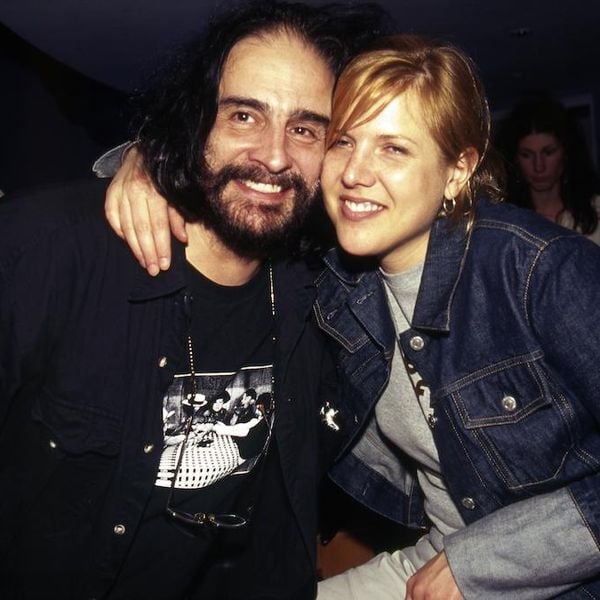
The Loft still runs four times a year in New York, with Colleen ‘Cosmo’ Murphy as one of the musical hosts. Murphy also runs Lucky Cloud Sound System in London, which Mancuso helped set up in 2003. They’ve been throwing Loft-style parties in London for over twenty years with the same membership-and-invitation model. Whilst not cooperatively run, the communal modes of operation are inspirational to this day.
European developments
Over in Berlin, many post-Wall dance spaces were effectively incubated in the squat scene. Tresor emerged from the vault of an abandoned department store in 1991. Kunsthaus Tacheles ran as an artist-occupied ruin for over two decades. Today, there’s venues like ‘://about blank’ who operate an explicitly collectively-run club. Since 1994, YAAM (Young African Art Market) has been run by the non-profit organization KULT. It provides a space for Reggae, Hip-Hop and Afrobeat grassroots musicians to start their careers.
Alternative methods of running events and venues have existed for centuries. Sister Midnight, one of London’s newest cooperatively-run music venues, is in the former Brookdale Club – a working men’s club. They’re not inventing a new model, rather excavating one society almost bulldozed.
How co-ops actually work
In a co-operatively owned venue every investor gets a vote when it comes to making decisions. Regardless of how much someone’s put in, their vote counts the same as everyone else’s. Sister Midnight’s 865 investors put in various amounts. The Beggars label group put in £50K and many inspired, local individuals purchased the community shares of £25. Regardless, it’s still one vote for each of them. In their case, shares cannot be sold, traded or transferred between members, unlike shares in a typical company. But members can eventually withdraw their shareholding, along with any interest accrued once approved by the board.
In most co-ops, profits are usually reinvested rather than skimmed by investors looking for an income. This helps them improve services and stay self-sufficient for, in some cases, centuries. Much like the Shore Porters Society, a Scottish removals service that’s been going since 1498.
Community in action
People around the world are rallying to save their favourite venues from turning into unaffordable flats or soulless co-working spaces. Before the Globe in Newcastle was purchased by the Jazz Co-op in 2014, it was falling on hard times. As the first community-owned music venue in the UK, it’s celebrating its 12th birthday this year. The empty working men’s club that Sister Midnight are refurbishing was sitting idle for many years, doing nothing for its local community.
The Sister Midnight story has really captured the hearts and minds of the music scene in London. It represents a rare grassroots victory in this era of corporate takeover of ticket sales, festival lineups and the charts. Over 1100 members have raised £365,000 since 2021 and it’s not even open yet. What began as a small night in a Deptford basement has evolved into a widely-shared mission by people that want to democratically decide the future of music venues.
Shining Shambala
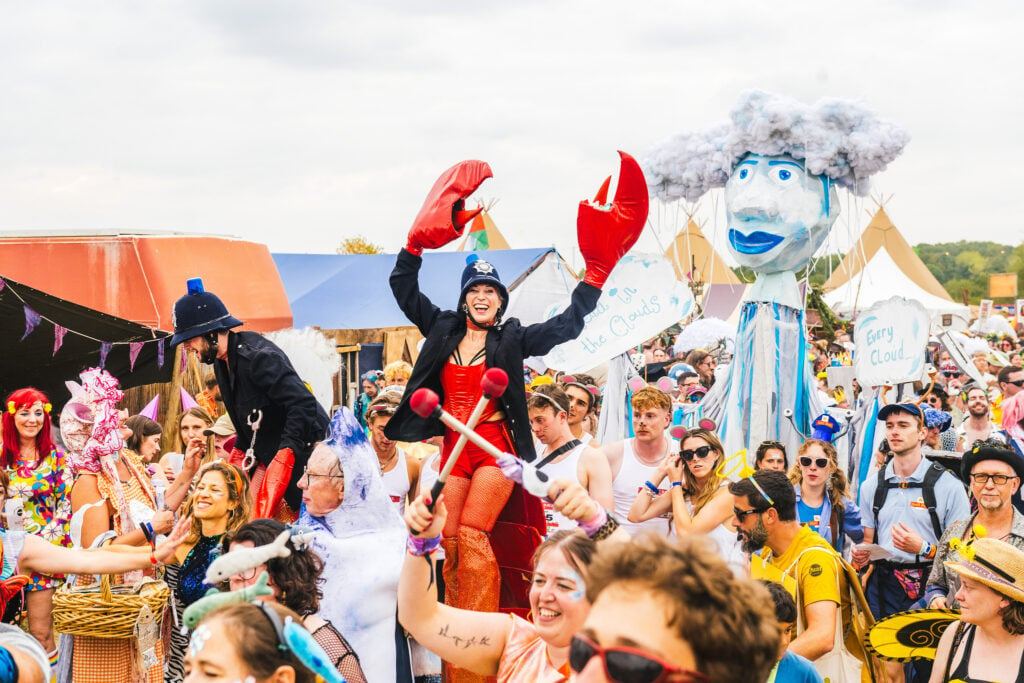
In an interesting turn of events, Shambala music festival recently became Britain’s first ever worker-owned festival. Kambe Events, the company which started the festival 26 years ago, said that workers will operate under an Employee Ownership Trust (EOT). “In an increasingly commercialised festival scene, we simply could not sell to venture capitalists” said co-founder Chris Johnson. Dan Raffety, another co-founder, said: “It is patently clear that the current capitalist model is fundamentally broken. As a society we must explore alternative models of ownership as a way through which the massive power and potential of capitalism can be focused on serving humanity and the planet at large.”
American non-profits
In the USA, the model often looks a bit different. It relies heavily on non-profit structures (501c3) or worker/musician cooperatives rather than the UK’s specific Community Benefit Society model. Venues like the Kennett Flash in Pennsylvania or the Black and Tan Hall in Seattle are proving that the model not only works, but is helping musicians and local communities thrive by providing spaces and stages cheaper than their for-profit counterparts.
It’s worth noting that non-profits are also a positive force in keeping music scenes alive and interesting. 32° East in Kampala is a home for the arts community in Uganda. In addition to hosting over 100 artists in-residence, they provided emergency relief to artists during the pandemic and are a space for musicians to perform at affordable rates.
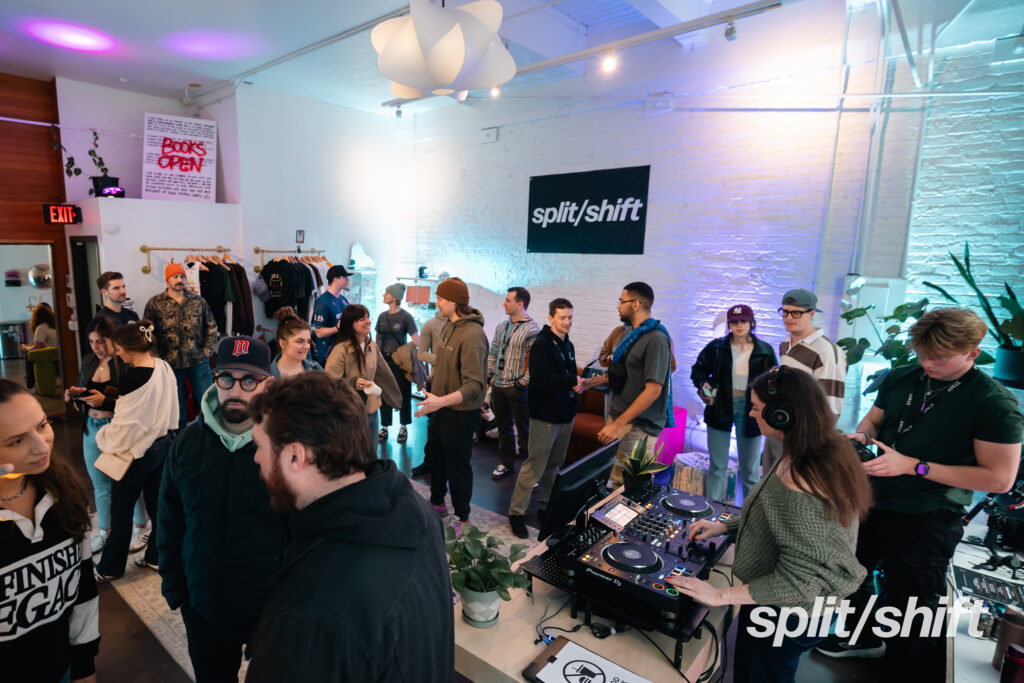
split/shift is a nonprofit music and events collective in Milwaukee, Wisconsin. They support local DJs, producers and artists by giving them a place to share their work. Both at their in-person events and online. All DJs know how hard it is to even get through the door and play in venues. Organisations like split/shift create a platform for grassroots musicians and DJs. Creating a bridge between performers and venues only helps to keep venues alive. This is because they’re providing the talent that brings an audience through the doors.
What’s next?
Every time we rally to save a privately-owned venue, we’re subsidising a landlord. Every crowdfunder to keep the lights on at a venue just transfers public wealth into private equity. Which eventually ends up in a bank’s balance sheet.
Designing music venues as co-ops sets them up for long term success. Success which gets to be defined by its own community. They can decide who gets booked, what a ticket costs or what color the smoking area gets painted.
As music lovers we need to stop asking, “how do we save this venue?” and start asking, “who owns this venue?” How much are you willing to become involved with your local community venue? Would you work shifts? How can you contribute your skills and collaborate with others to make a venue work for your community? With hundreds of UK music venues closing down in recent years and hundreds more set to close without legislative change, cooperatively-owned venues might be the only solution.
At the talk on nightlife, host Ed Gillett told a story about a venue in Edinburgh called The Forest. “The guy behind the bar called time one night and someone asked “why?”- “because I need to go home” – “well I’ll do it,” he shared. “So, they trained him up to run the bar, gave him the keys and the place got to stay open. To me, that’s what we should be aiming for. We talk about community — but I think it’s the idea that anyone could just step up and help run it if they so chose.”