
Music festivals no longer only exist during the weekend that their stages open. Increasingly, festivals are extending their programming beyond the physical event by uploading DJ sets, radio broadcasts and conversations online. This creates an opportunity to turn a short-lived event into an ongoing audio archive.
From curated playlists and to globally syndicated radio shows, here are some of the ways festivals are using Mixcloud in different ways to reach listeners around the world.
Contents
Creating an archive of sets
One of the most common uses of Mixcloud is sharing recordings from festival stages. For fans who attended the event, it’s a way to relive standout moments. For those who couldn’t attend, it offers a window into the festival’s programming and shifting musical identity year on year.
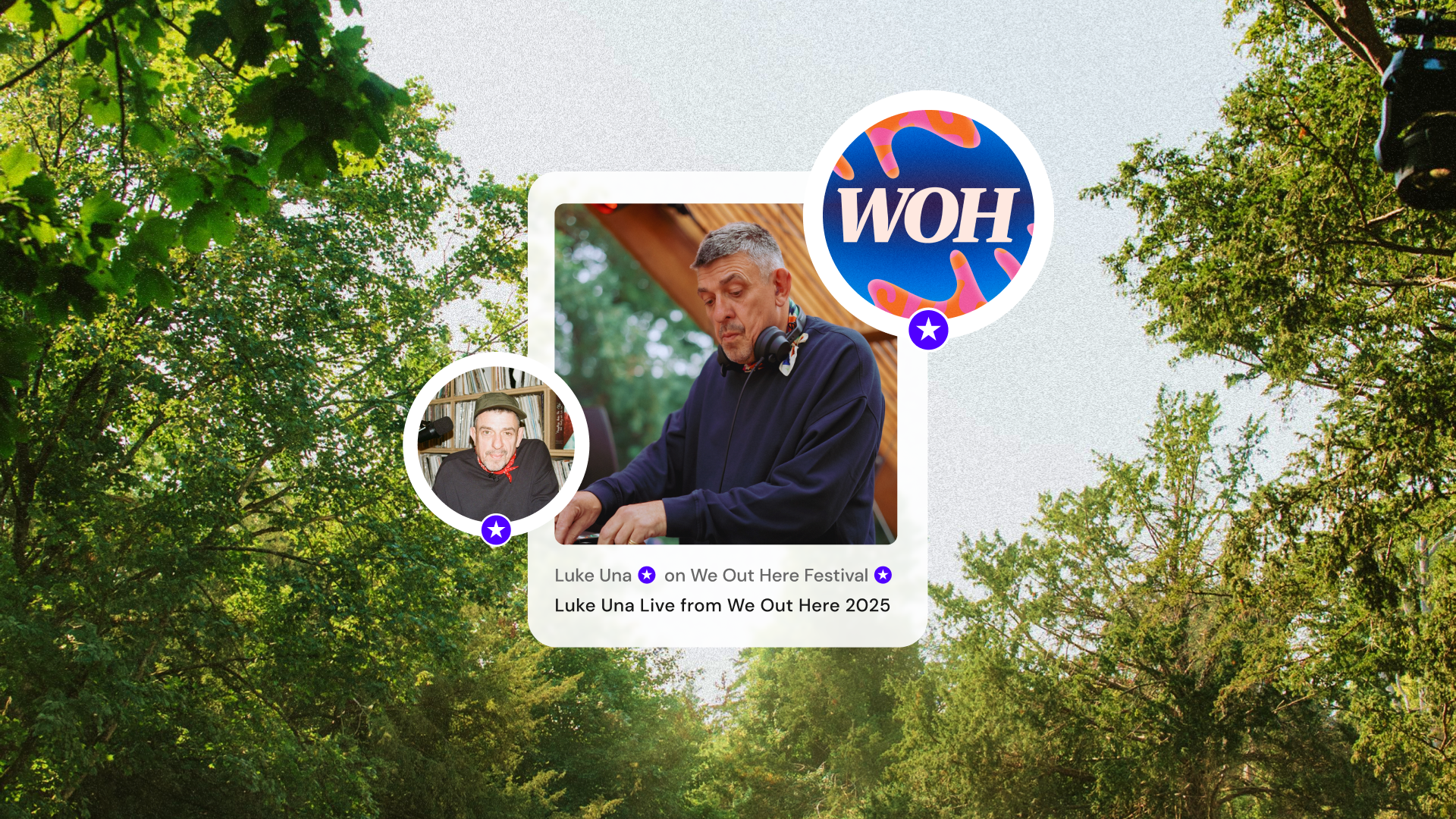
Festivals like We Out Here have embraced this approach by uploading recordings from across their lineups. Then, they create playlists to separate sets by the stages and years they took place. Instead of scrolling through a long list of uploads, fans can jump directly into a specific stage or revisit an entire year of sets in sequence.
For festivals planning to upload large amounts of content, playlists provide a simple way to keep their Mixcloud profile structured and easy to explore. Over time, this builds a catalogue that reflects the festival’s curatorial vision and musical community.
Housing regularly curated content
Some festivals take a different approach by producing exclusive content throughout the year, before, during and after the big event has taken place. Many employ regular mix series by enlisting the latest and greatest DJs and artists and opening the door to their styles and sonic worlds.
Dekmantel is a strong example of this strategy. Its ‘Dekmantel Mix’ series is nearly 500 editions in, and has featured DJ sets by Oblig, Moxie, FAUZIA, Introspekt and Mia Koden. This approach effectively prolongs a festival’s output, pivoting them to an ongoing radio-style series. It keeps the festival visible throughout the year while continually introducing listeners to artists they admire and respect. For fans, it recreates the feeling of discovering new performances week after week rather than consuming everything in a single burst.
Building a global radio brand
On the subject of radio, some festivals have fully embraced that medium and created fully developed radio platforms. Ultra Music Festival operates UMF Radio, a broadcast series that has grown into a globally syndicated radio show.
Rather than focusing only on recordings from a single festival, UMF Radio functions as an ongoing brand that reaches listeners around the world. Much like Dekmantel, each show has a single subject, with guest mixes from a range of selectors around the world. The show helps maintain audience engagement between events while reinforcing Ultra’s global identity.
Meanwhile, Primavera employs similar methods. With its Radio Primavera Sound imprint, it uploads broadcasts of guest mixes, live panel discussions, audiovisual shows and interviews with musicians, actors and more. This serves as a way of capturing the synergy of its activity all year round.
Using Host Tagging to highlight artists
Another feature festivals use is Host Tagging, which connects mixes directly to the artists performing them. For We Out Here, Host Tagging has been used to link performances to artists such as Luke Una. This helps listeners discover the performer behind the set and allows artists to share the recording across their own audiences.
Festivals like WOMAD also use the feature, although more often with presenters who conduct interviews and host radio shows. When used consistently, Host Tagging strengthens the connection between festivals, artists and listeners.
Extending the festival experience
For many festivals, Mixcloud has become a long-term archive of performances and happenings, serving the purposes of reaching audiences on a regular basis and stimulating communities online, well after the last act has performed live.
Even after meeting each other IRL, festivals extend the good will of human connection in online spaces, keeping music conversations flowing and the family spirit alive until next year. Fostering these connections is important not only to us, but the festivals themselves, and their online programming can make festival day feel like every day. Whether it’s publishing sets, releasing weekly mixes or building global radio shows, festivals are finding new ways to turn a weekend event into ongoing music experiences.