
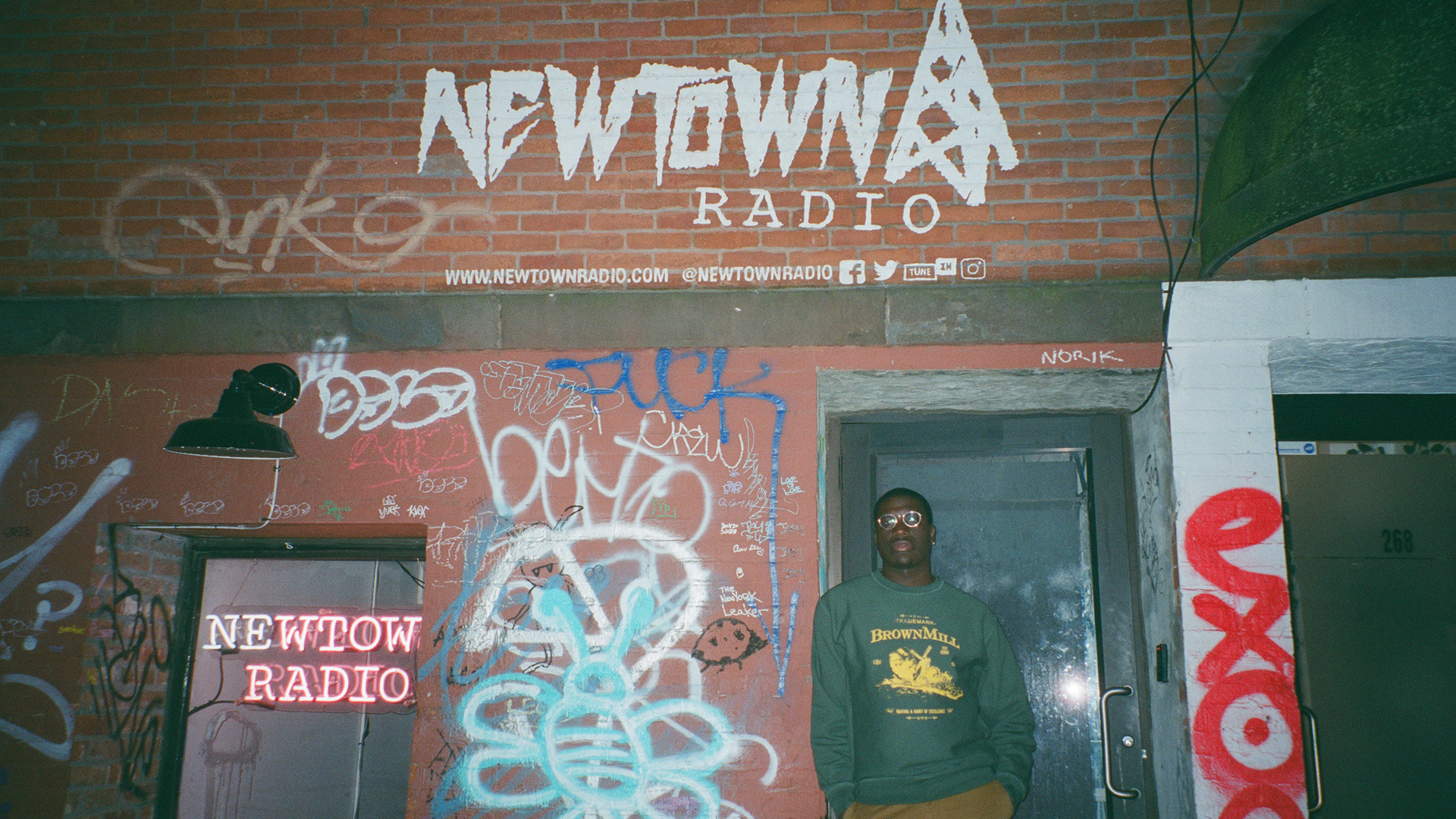
Much of what makes radio so special is the idea of exploration. Digging deep into the music and culture around your favourite artists and movements, often maturing your relationship with your subject. Over in New Jersey, Délé is driven by curiosity, care and a deep respect for music as cultural storytelling. On Newtown Radio, his show ‘Your Favourite DJ’s Favourite DJ’ (YFDFD) operates as both a platform and a conversation, spotlighting local DJs, musicians and creatives who often exist outside the usual hype cycles.
Built around long-form dialogue and expansive selections, the show is less about chasing trends and more about creating space. For new audiences to discover overlooked talent, for artists to tell their own stories, and for music to act as a window into different cultures, histories and moments in time.
We spoke to Délé about his radio journey, the chance encounter that secured his show on Newtown and his dedication to telling stories.
Contents
- 0.1 How did your journey with music begin? Why did you want to become a radio host?
- 0.2 How did you get your radio show at Newtown Radio?
- 0.3 What really attracted you to radio in the beginning?
- 0.4 What are some of the guiding principles of YFDFD?
- 0.5 What would you say was the one turning point for you in your radio journey?
- 0.6 Tell us how you prepare for your show.
- 0.7 What is one radio show from your archive that defines you?
- 0.8 What are your proudest achievements in your radio career so far?
- 0.9 In building your community around you, what have been some of your highlights?
- 0.10 What are some of your top tips for presenting and putting together a radio show?
- 0.11 Do you have any predictions about the future of radio?
- 0.12 What do you think you’ve learned about yourself through your years in radio?
- 1 Share this:
How did your journey with music begin? Why did you want to become a radio host?
Délé: I’ve been immersed in music from an early age thanks to my parents. Some of my earliest memories are of listening to the likes of Joe Dassin, Jimmy Cliff, Salif Keita, Alpha Blondy and Fela Kuti on road trips across the United States. In elementary school, I played drums and moved on to play alto, tenor and baritone saxophone throughout middle and high school. Once I got to college, I joined WRNU, the campus’s radio station where I learned how to DJ.
While a member of WRNU, I produced a podcast/radio show that was meant to highlight local artists and creatives for about four years. Ultimately I was frustrated with the direction the project was going and left to figure out exactly what it was I wanted to do. I loved DJing but I also enjoyed being able to platform folks that I thought were talented and deserved some shine and I couldn’t think of a person better than me to execute that vision.
How did you get your radio show at Newtown Radio?
I had been a fan of Marvelito, a NYC-based DJ, producer and host of ‘Like That World’ on Newtown Radio for years. We had corresponded online and exchanged tracks for a while. Then we started to run into each other in Jersey and Brooklyn. Eventually, Marv invited me to go see him spin at Newtown Radio for another show, ‘Strangers Live!’. I pulled up and the owner and manager of Newtown happened to be present. Marv introduced us and I ended up pitching what would become ‘Your Favorite DJ’s Favorite DJ’ to him. A month later, I was on air and the rest is history!
What really attracted you to radio in the beginning?
My experience at WRNU made me fall in love with radio. Before I became a member, I used to just kick it at the station and exchange music with hosts and their guests. The radio station was a safe place. Somewhere one could come as they were. That allowed me to embrace my more creative side without really knowing it. Once I officially joined WRNU, I knew that radio was the perfect medium for me. Mainly to express myself as an artist and platform other creatives that I felt deserved some love.
What are some of the guiding principles of YFDFD?
A guiding principle is to try and spotlight artists, DJs and creatives that haven’t had much press. There are so many talented folks in this area, Jersey in particular, who haven’t any exposure or write ups and YFDFD aims to provide that. A lot of shows feature just DJ mixes but I think the interviews are the most important bits of YFDFD and really allow us to get to know the guest. What drives them as artists, who are their inspirations etc. I also make sure to book guests whose talents I genuinely appreciate and respect. Versus booking whoever’s the hottest or en vogue or will generate the most clicks.
For my guests, I let them know that YFDFD gives them the opportunity to show a side of themselves that might not otherwise get to share. The DJ sets occur outside of a setting where the audience is a determining factor in what music gets played. People who are tuning in are listening for the artists and to potentially discover music. In that context, I encourage my guests to have fun and experiment. Play that weird shit they’ve always wanted to play. But, most importantly, I encourage my guests to be themselves.
What would you say was the one turning point for you in your radio journey?
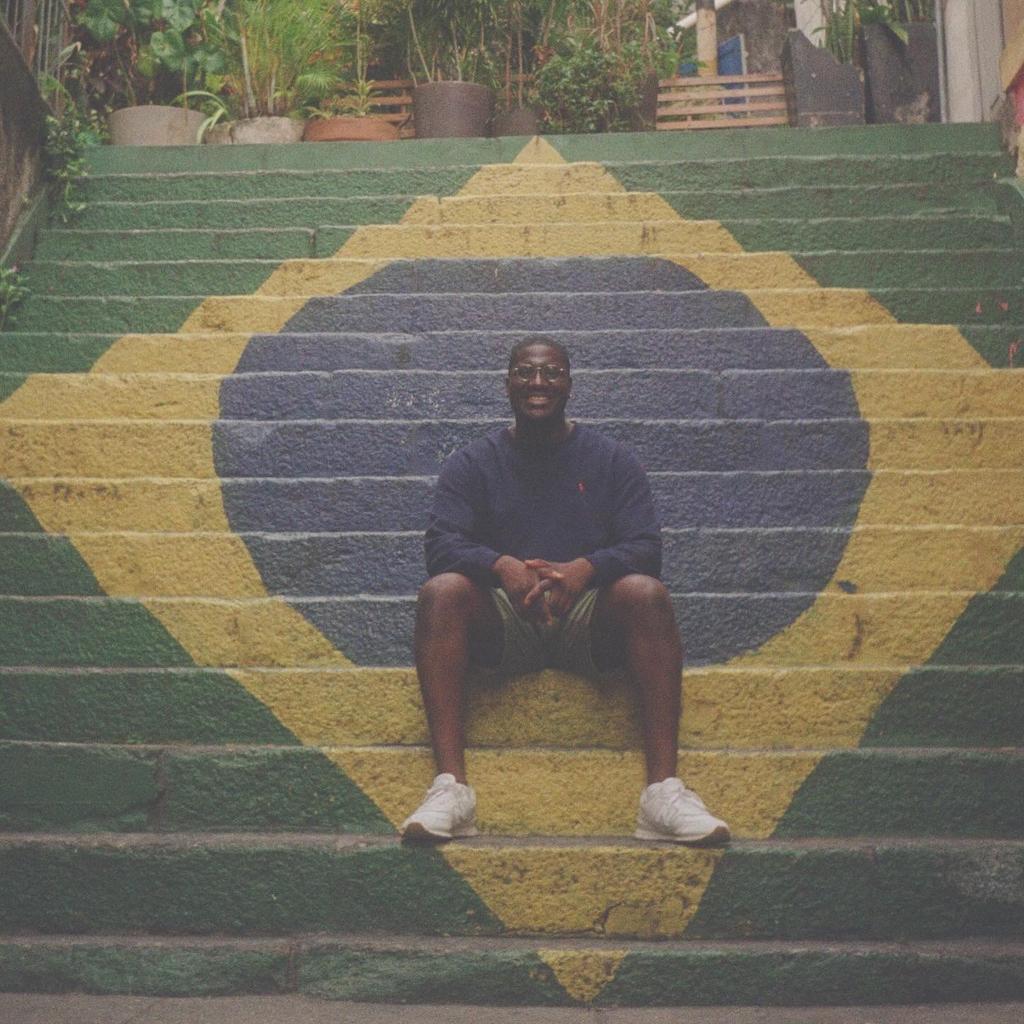
Landing my slot at Newtown Radio. Taking what I learned during my time at WRNU and applying those lessons at Newtown has allowed me to establish a level of consistency over the past few years that has been a springboard for my success. Since locking in my slot at Newtown, YFDFD has taken me to play in Milan, London and Sao Paulo. It’s introduced me to a host of incredibly talented individuals and some of my best friends.
Tell us how you prepare for your show.
The most preparation that I usually do for a show is around the tunes that I’ll play. I hate repeating tracks on a mix. Most of my guests (so far) don’t have a lot of press. So, there isn’t much research to do outside of listening to their mixes and perusing their social media. YFDFD has a relatively simple format and is meant to be more of a conversation than an interview. I book my guests roughly three months in advance and have all the assets for the show put together beforehand.
What is one radio show from your archive that defines you?
I’ll cheat and give you two answers: 1. DJ Abud and 2. Mark Francis. I’d say the interview I conducted in Sao Paulo with DJ Abud is the first show I recorded outside the States. It was one of the more substantive interviews I’ve had the opportunity to conduct. YFDFD is meant to be a show that delves into how music serves as a window into diverse cultures, histories and moments in time and that interview is the embodiment of that ethos. In his interview, Abud talks about how the four pillars of Hip-Hop embedded themselves into the fabric of Sao Paulo during his teenage years in the 1990s. The role Brazil’s right wing military junta played in exporting Brazilian music to the world and how his musical practice intersects with his spiritual practice.
The Mark Francis episode is another opportunity to peer into a window in time, contextualize some of the history of House music and highlight some of its lesser known contributors. This show was quite special to me as I, a New Jersey Native, got to interview a New Jersey legend and really dig into the who, what, where, when and why of House music in Jersey.
What are your proudest achievements in your radio career so far?
I celebrated three years of YFDFD in January 2026! I was able to host a show where local artists Janetza, Slim Carrey, The Lights and Triipout Wood performed along with DJs Mari, Son of Brandy and Spank.
In building your community around you, what have been some of your highlights?
Being able to platform my peers and give them a space to be themselves. I think of my journey as a DJ and all the folks who made space for me or gave me an opportunity to express myself. This is a part of my attempt to pay it forward.
“I encourage my guests to have fun, experiment and play that weird shit they’ve always wanted to play.”
What are some of your top tips for presenting and putting together a radio show?
My first bit of advice is to not be too hard on yourself the first 5-10 shows; it’ll be a work in progress and that ‘s fine. I’d say it took me about three months to really get into a groove. If your show is interview-based, invite folks that you’re comfortable with to those first few shows to ease any pressure. I’d also emphasize consistency. Recording and releasing on a consistent basis, creating and distributing promotional material. If you have guests reaching out and securing their talents in advance, that goes a long way in making the show sustainable.
Do you have any predictions about the future of radio?
Radio is almost unrecognizable from when I was younger. I remember being glued to Z100 and Hot 97 to keep up with new music as a kid but today’s programming over the airwaves leaves a bit to be desired. However, the proliferation of online radio gives me hope. I’d really like to see the general public ditch their streaming services and really tap in to (re)discovering music by trusting us DJs, curators and tastemakers to expose them to some different records.
What do you think you’ve learned about yourself through your years in radio?
I’ve learned that I ought not to put myself in a box, to trust my instincts and have faith that I know what I’m doing.