


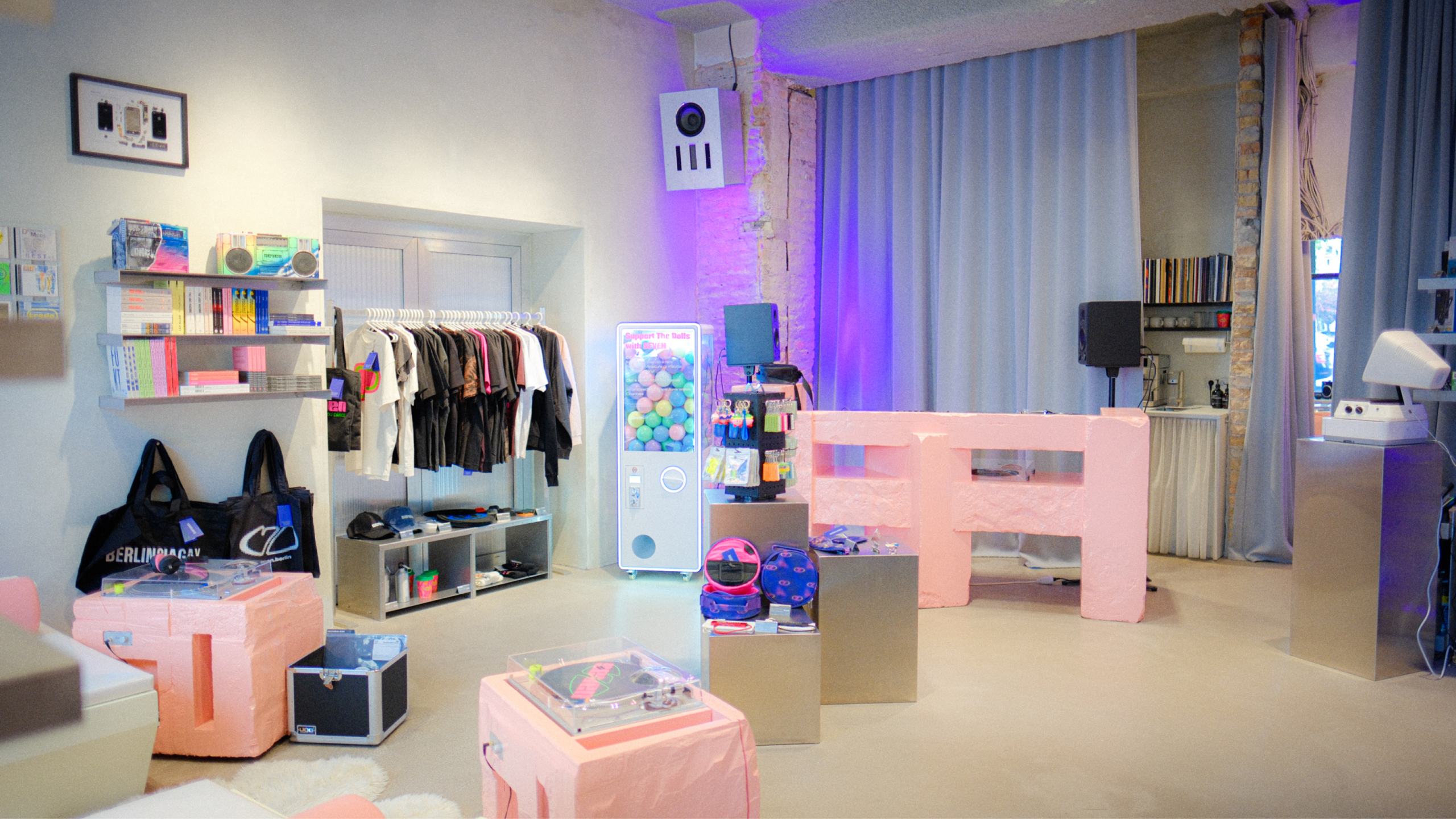
It’s a crisp spring afternoon on Torstrasse, the artery of Berlin where the curious, the cultured and the musically devoted converge as a matter of daily routine. Today, though, something is drawing a bigger crowd than usual. Hundreds of people are filtering in and out of a bright new storefront – the first physical record store for the record label SEVEN – and its opening party is in full swing.
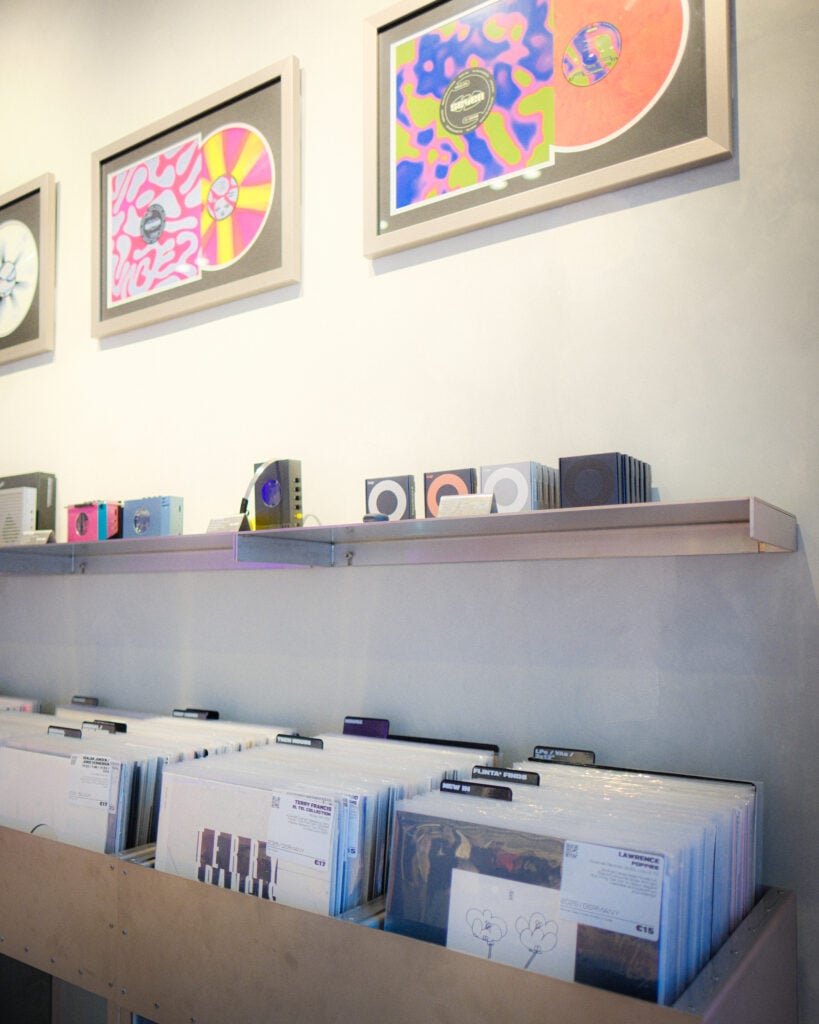
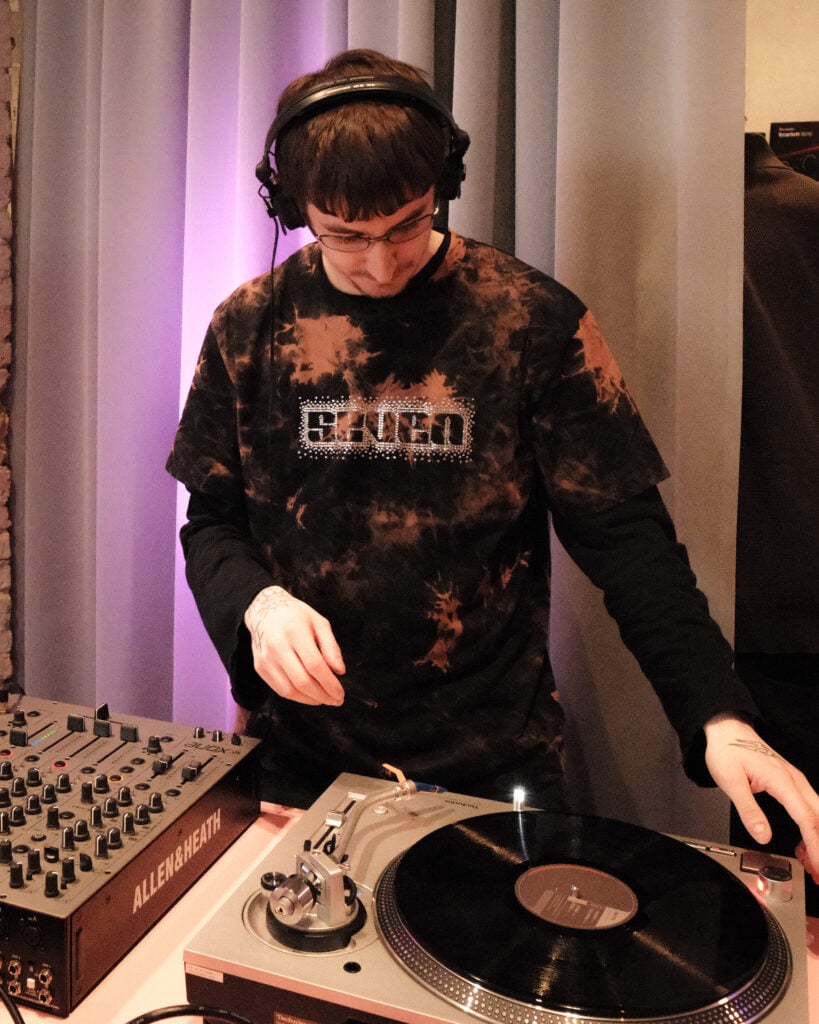
Inside is a music lover’s dream made tangible. Crates of vinyl to flip through, record players set up to test the gear before you buy, music books, accessories, keychains, hats. At the centre of it all sits a custom-built DJ booth — a piece striking enough to have landed in the pages of Wallpaper and Architectural Digest — where SEVEN team members CRYME (the label’s Co-Founder and Lead A&R), Jonny Mojo (Distribution and Trade Manager of the store) and Rachel Noon (the label’s Release Manager) are taking turns filling out the afternoon’s mix schedule. In-house photographer Mara Menzel moves through the crowd capturing the exuberance of the moment, while Alex Cheves – Editor of SEVEN’s sister magazine Hinterhaus – and SEVEN Co-Founder Glenn Elliott are behind the state-of-the-art cashier, personally checking people out.

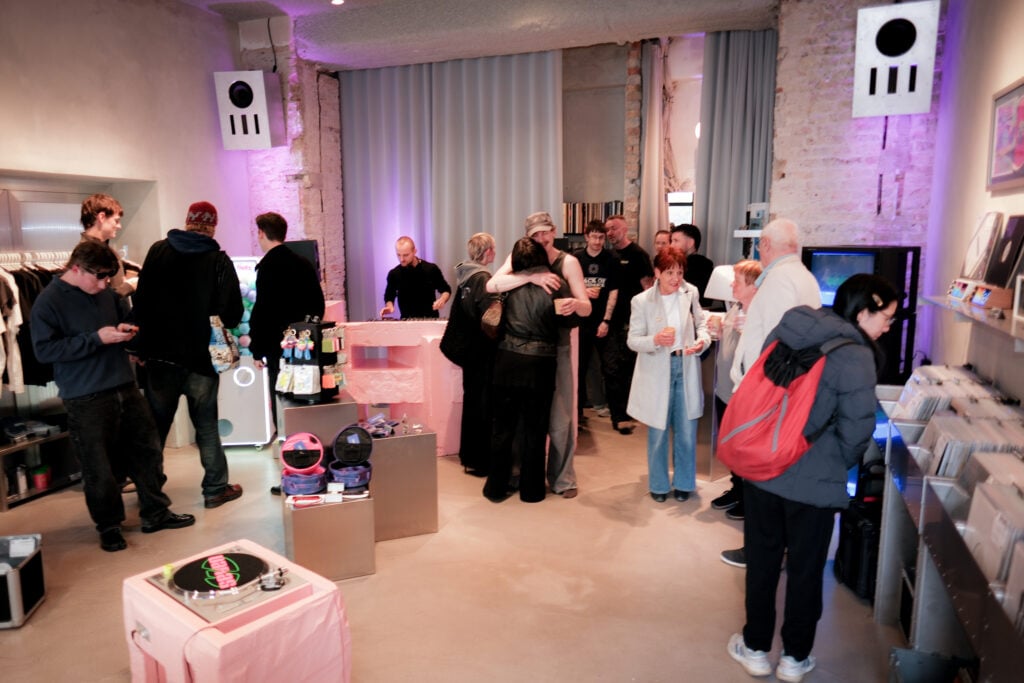
That last detail matters. In a world increasingly mediated by algorithms and automation, SEVEN’s founding instinct has always been to look people in the eye. The record store is simply the fullest expression of that instinct yet. A physical home for a label that has spent its short existence proving that community, transparency and genuine artistic belief are not just values to print on a press release, but a way of actually running things. On top of shining a light on queer and FLINTA communities that would’ve otherwise given up on their hopes of becoming full-fledged producers and musicians.
Since launching in 2024, SEVEN has quickly established itself as a powerhouse in Berlin’s most underground electronic music scenes. With dozens of releases from artists including Roza Terenzi, JakoJako, MCR-T, Sparkly Pony and Posture – in addition to its ongoing mix series – music from the label has found its way into sets at Panorama Bar and Dimensions just to name a few.
Before the festivities at the store kicked off, we sat down with Co-Founders Glenn and CRYME to learn more about SEVEN’s artist-first ethos, catering to underrepresented communities and the true meaning of Pride Month.
“We want to put more Black, queer and women artists on the stage.”
Contents
- 0.1 Congratulations on opening your first physical store! Talk to us about the importance of a physical store for you guys and why now was the right time.
- 0.2 In a time where music curation is becoming more dominated by AI and algorithms, is the physical store a response to this change?
- 0.3 SEVEN launched in 2024. To take us back a little bit, how did you guys meet and what led to its founding?
- 0.4 What values would you say are important to you as a label?
- 0.5 Generally what do you look for when you’re signing artists? Is there a nonnegotiable quality they must have?
- 0.6 What does your ‘artist-first ethics’ actually look like in practice?
- 0.7 Financially, how does a label built this way work?
- 0.8 SEVEN describes itself as queer and FLINTA-leaning. Why was that a conscious founding decision?
- 0.9 Speaking of your mix series, it’s very successful in its own right. What function does it serve for the overall SEVEN brand?
- 0.10 Switching gears slightly, what does Pride Month mean to SEVEN specifically?
- 0.11 How would you sum up what queer and Black communities have given to music culture?
- 0.12 What have been SEVEN’s proudest moments so far?
- 1 Share this:
Congratulations on opening your first physical store! Talk to us about the importance of a physical store for you guys and why now was the right time.
Glenn: We’d been running an online shop for a couple of years, always writing little notes with every record we sent out. You get to know customer names, see what they’ve bought before. But the thing that really excited me was when people knocked on the door before we opened. One guy said he worked at the theatre around the corner, that he was one of the dancers. That kind of connection, you just can’t get from an Instagram impression count.
CRYME: Vinyl is already special because you can hold it. The store extends that. When you buy something online, you can’t try it on, you can’t touch it. Here, you can. It’s not just records either; there are books, accessories, merch, keychains. You come in for a T-shirt and you leave with a little pink Kirby!
Glenn: We want to be a community hub, a first home for vinyl for producers who’ve never had that. Our whole mission has been about elevating marginalised talent: Black, queer, FLINTA artists who make great music but are being overlooked. Having our own store means we can put their records on actual shelves, not just online.
In a time where music curation is becoming more dominated by AI and algorithms, is the physical store a response to this change?
Glenn: Absolutely. Algorithms are very good at giving you more of what you already clicked on. You click one picture of a cat, suddenly that’s all you see. But we take curation seriously. Our label catalogue is curated by CRYME. Every artist and track is chosen because he genuinely loves it. Our store catalogue is curated by Jonny, who hand-delivers records around Berlin on the back of his bike. That’s personal taste, personal journey. You’ll find things you’d never expect, and that’s the whole point.
I came to music from tech. I’ve seen what optimising everything to the nearest decimal point looks like. There’s something actually quite freeing about a world you can’t fully predict. Our current release by Ackermann is storming in record stores – more so than online – and I genuinely have no idea why. In tech that would be wild to me. Here, I kind of love it.

SEVEN launched in 2024. To take us back a little bit, how did you guys meet and what led to its founding?
CRYME: We met about four and a half years ago. I was DJing, and Glenn got involved in managing my bookings. He spotted that all my invoices had the same number on them! Then he offered to sort it out, and that was that. I think at that point he became my manager!
Glenn: CRYME was on the books at a booking agency which then asked me to join them as a booker, so I spent like two years booking Techno artists.
CRYME: We spent a couple of years talking about doing a label, and then one night we were in Estonia at a friend’s film premiere, and we just said, ‘let’s do this.’ That’s actually when SEVEN was born.
Glenn: But we needed a name. CRYME used to play football for fifteen years and he wore the number seven. So, it felt right. Symmetrical, short, nothing bad in any culture. Then we found a French designer called Milla living in Berlin, reached out randomly, and she turned out to have already designed a flyer for CRYME years earlier in France. She’s designed every record sleeve of ours since.
What values would you say are important to you as a label?
Glenn: There are a lot of great artists here, and we trust them at every point of their journey with us. We give them the space, don’t get in their way, and let them do great stuff.
Generally what do you look for when you’re signing artists? Is there a nonnegotiable quality they must have?
CRYME: The music always comes first. We tend to release a lot of stuff from friends or friends of friends and we have a process where we encourage people to send their demos and we listen to them. But also, the artists would need to be willing to work with us too, and have an attitude of collaboration. We’ll give you the freedom.
What does your ‘artist-first ethics’ actually look like in practice?
Glenn: I run CRYME’s third-party release schedule — music he puts out on other labels — so I get to see how other labels operate. Honestly, some of it is really poor. Artists don’t receive a contract, don’t receive an offer letter, don’t even find out when their release is coming out until it appears on Instagram. That’s someone’s creative work. It’s personal.
For us it starts with communication. If an artist has to ask me something, I’ve already failed, because they should’ve had that information. We have a WhatsApp group for every release. Our contract is deliberately written in plain language. A lawyer would probably fall off their chair reading it, but an artist can understand exactly what they’re signing. We hold promo shoots in Berlin together, we book them for events first here before we look elsewhere. It’s just treating people well.
CRYME: Ackermann has released over a hundred records in 20 years across 10 different aliases and he told us after his first release with SEVEN that we were one of the best labels he’d ever worked with. His eight-year-old daughter sent us handmade SEVEN stickers she’d coloured herself. That means more than any sales figure.
Financially, how does a label built this way work?
Glenn: It’s a beautiful financial disaster. The more vinyl you press, the cheaper each unit gets — but we can only realistically sell 300-500 copies. So the economics are brutal. We operate on a 70-30% split in the artist’s favour, which is not standard. But what we ask ourselves is different: are we making really nice art? Are we treating everyone professionally? Do we release on time? Are we the kind of label we’d want to exist in the world? That’s the reward. We’ve started offering merch production and dispatch services to other small labels. That helps fund everything and lets us serve the community rather than consume it.
SEVEN describes itself as queer and FLINTA-leaning. Why was that a conscious founding decision?
Glenn: If you don’t see people like you in an industry, you don’t join it — because you don’t feel like you belong. So someone has to break the cycle. We want to put more Black artists on the stage, more queer artists, more women. And then people from those communities see that, and it makes a difference over time. I’ll be honest though: our overall diversity stats are good, but if you look only at releases, it’s not good enough. It’s genuinely hard to find female producers in our specific genre at the level we want. Most of the ones who fit are already very busy, because there are fewer of them. So we keep pushing.
CRYME: And in the mix series — which is where people really discover the label — around 70% of artists are queer or FLINTA. We try to be consistent across every touchpoint.
Speaking of your mix series, it’s very successful in its own right. What function does it serve for the overall SEVEN brand?
CRYME: The mixes are a nice intro to an artist and the label generally. Lets you know what kind of worlds we live in and the people who curate those worlds. Then, out of the mix series, when I really like a mix from an artist who’s hopefully a producer as well, we can give them a place alongside various artists. Then maybe an EP on SEVEN can come from that. The mix series just offers a lot of opportunity on both sides.
“Pride is a time when everyone who thinks it doesn’t affect them should ask: what should I be doing?”
Switching gears slightly, what does Pride Month mean to SEVEN specifically?
CRYME: Pride should be 12 months, always. For us it kind of is. We are the label, every day.
Glenn: But it matters that it’s marked. I think the more interesting challenge is not for queer brands to celebrate Pride; you’d expect that. But for the straight, mainstream brands to use their platforms meaningfully. The biggest brands in music are not the queer ones. They’re the straight ones. So the question is: how are they using their reach? The fact that the only Techno mix series that did anything for Pride last year was run by a queer House label says something that the rest of the industry should sit with.
How would you sum up what queer and Black communities have given to music culture?
CRYME: House and Techno are Black music. That’s where it all comes from. The creativity that gets produced from communities that are marginalized and oppressed. It’s extraordinary, and it’s the engine of almost everything that matters in electronic music.
Glenn: There’s something about how oppression can generate extraordinary creativity alongside extraordinary misery. The two are inseparable. It’s a contribution so vast it’s hard to put into words. What SEVEN can do is a tiny thing. But we can make sure those artists feel important, get a great experience, and know someone was there at the start believing in them before anyone else did.
What have been SEVEN’s proudest moments so far?
Glenn: The team, honestly. Last week I was in the office watching everyone rush around and I just felt proud. Everyone purposeful, everyone busy, good-hearted, knowing what we’re here to do. Building that is hard and it never gets easier.
I’m proud of being a first home for artists. Moody Mehran is a well-known DJ in Amsterdam, who’s been secretly producing for 10 years and never released anything. We have a release that features two trans artists – a trans woman and a trans man – that I think is genuinely brilliant music and that more people should hear. That matters more to me than the numbers.
CRYME: And friends. André Zimmer messaged us after Glenn complimented one of his tracks, and it turned out he’d been playing my music too without us knowing. He came to stay for a month, then for six months, and now he lives around the corner. He runs Big Trouble Records and we dispatch for the label. He’s releasing on our sub-label A.2AUM. That’s Berlin.
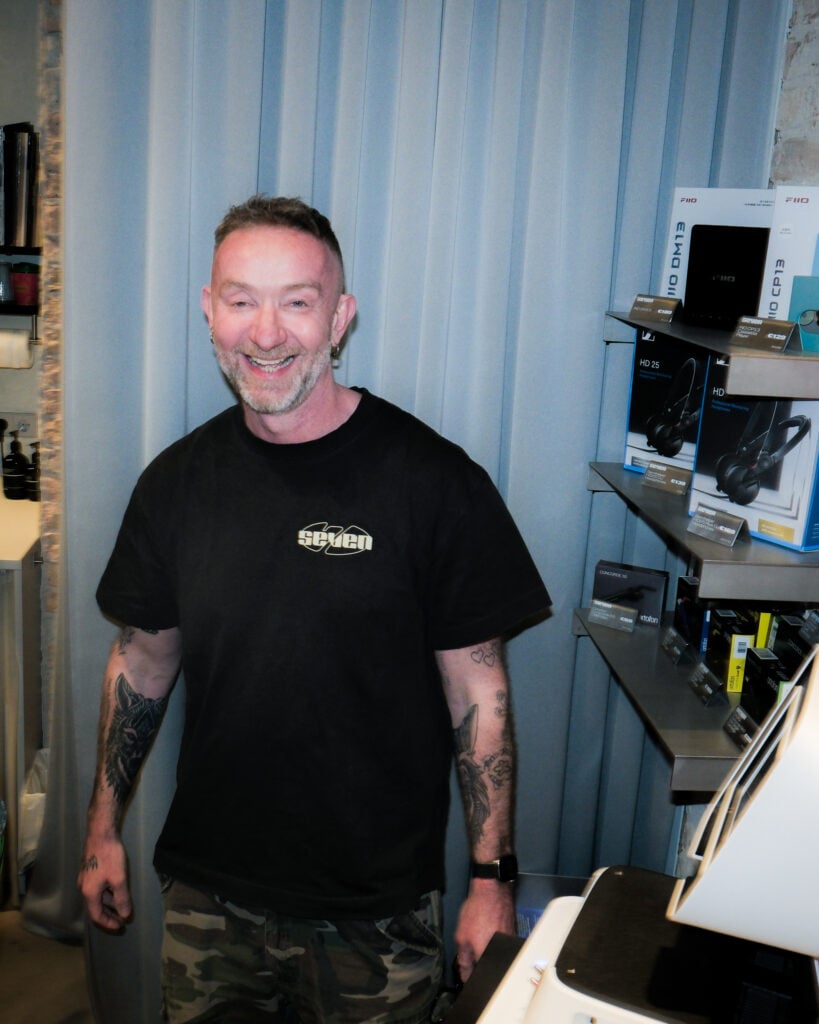

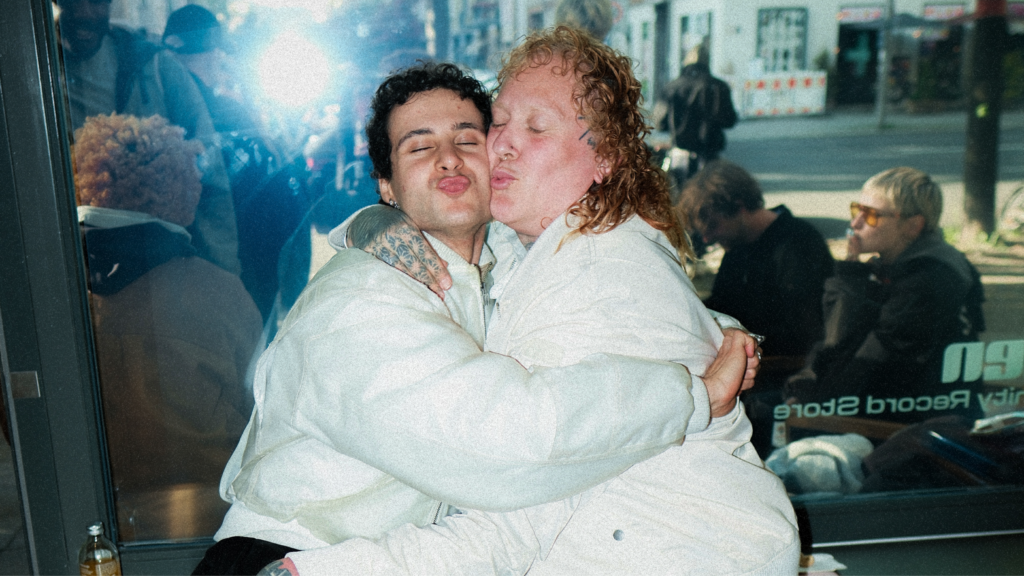
Photos by Mara Menzel