


Across social media, millennials and Gen Z are reminiscing about the great year of 2016. Simpler times, less pressure, a pre-COVID world. Once the algorithms picked it up, brands jumped on the trend and before you could say Pokemon Go, internet philosophers began dissecting what this trend says about the world.
Amidst the popular moment we thought we’d take a look at a great year for music and for the Mixcloud community. There’s most definitely a need at some point to discuss whether widespread nostalgia as a cultural trend is a good or bad sign of current affairs but not today – “boring!” – give me a huge dose of nostalgia, now please.
Take me back to Vine memes, physical gig tickets I could blue-tac to the wall, Damian Marley and other great reggae artists at Boomtown Lion’s Den and Dave Seaman’s set at Glastonbury. 2016 has been widely cited as a great year for music. British comedian James Acaster even wrote a whole book, Perfect Sound Whatever, about why it was the best year for music ever. He cited albums from David Bowie, Kendrick Lamar, Bon Iver, Frank Ocean and Solange, amongst others, as evidence for his bold statement.
I went digging through the Mixcloud archives and found some gems from this golden year for music. Read on and buckle up for a one way ticket to 2016.
Contents
Alternative R&B made Pop groovy
Aside from the increasing staleness of the charts I do actually remember 2016 as a great time for an R&B takeover of Pop music that had a bit of oomph and a bit of groove. There were some great releases such as Solange’s Seat at the Table, Anderson Paak’s Malibu, Jorja Smith’s second-ever-single ‘Where Did I Go’, that unforgettable Kaytranada album 99.9%, Childish Gambino’s Redbone (!?) and the R&B-adjacent Hip-Hop album from A Tribe Called Quest’s ‘We got it from Here’. Adam Kvasnica wrapped up the best from the year including all those above as well as David Bowie, Michael Kiwanuka and dreamy dark wave duchess, Abra.
When Grime went global
In 2016, Grime could be heard all the time on London’s local stations, as it made its way back to cultural relevance. Stations such as Mode FM, Pyro Radio, Radar and of course the legendary Fire In The Booth series on Radio 1Xtra allowed more people to witness the excitement of live Grime sets.

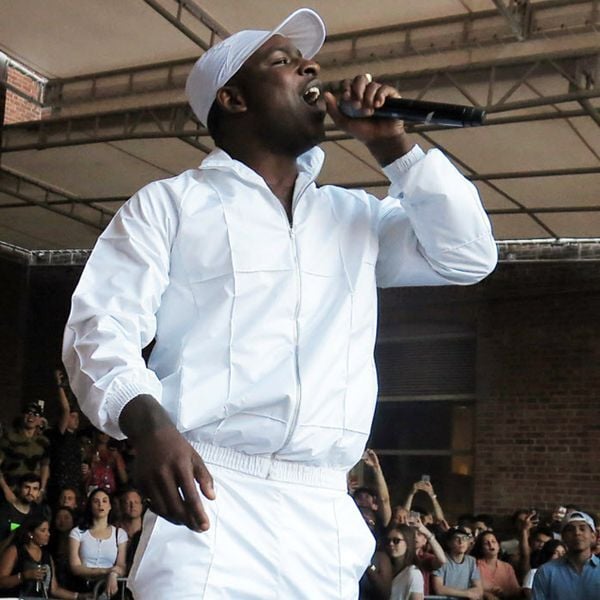
One of the beautiful things about this era was the awakening to scenes beyond the city of Grime’s birth. Thriving scenes in Manchester, Birmingham, Nottingham, Coventry and Bristol finally got their flowers.
2016 was also the year Grime moved from the British underground to a global sensation. Skepta’s Mercury Prize for Konnichiwa was a massive validation of the genre’s weight as a cultural export. Scenes began popping up as far as Brazil and Japan, after all.
The Vinahouse explosion
Mixcloud has one of the largest collections of Vietnamese House mixes anywhere on the internet. 2016 was the year Vinahouse came to party. But most people don’t know how this happened.
2015–2016 was the specific window where smartphones became affordable for the rural and working-class youth in Vietnam and Thailand. In 2016, mobile data in Vietnam was relatively expensive relative to income. Many mobile carriers offered low-cost social media data packages. This meant using Facebook was often free or very cheap, while browsing the ‘rest of the web’ cost money.
It just so happened that at the same time, Mixcloud had a better integration with Facebook compared to other streaming services. When a user shared a Mixcloud link on Facebook, it didn’t just appear as a link. It generated a full, playable widget directly on the Facebook news feed.
All that said, it was the spirit and insatiable dedication to the sound from listeners and DJ’s like DJ YE, DJ Producer Koi, DJ Ocean, DJ Tilo, Công Nguyễn and DJ Longchen that made the movement happen. In fact, if DJ YE was his own genre, he’d be in the top 10 most played genres on the whole of Mixcloud.
The dawn of the Lofi-Chill-Hip-Hop-type-beat
Lofi Hip-Hop mixes weren’t the ubiquitous 24-hour livestreams they are now. A decade ago, they were put together by dedicated curators who traversed the internet for producers all over the globe. The beatmakers were seeking analog-era sounds. Using old hardware like the SP-404 and Akai MPCs, they added in the hiss of cassette tapes, old movies and TV shows, rain sounds and anything they could rip from the internet. Perhaps they were rejecting the noise of the mass produced music market or turbulent geopolitics. Either way, Hip-Hop was getting cosy.
The genre as a whole was seeing scenes pop up all over the world. I was a huge fan of UK Hip-Hop labels High Focus, Blah, Lowlife, YNR, Yogocop, BBK, Big Dada – I could go on. But the story was global.
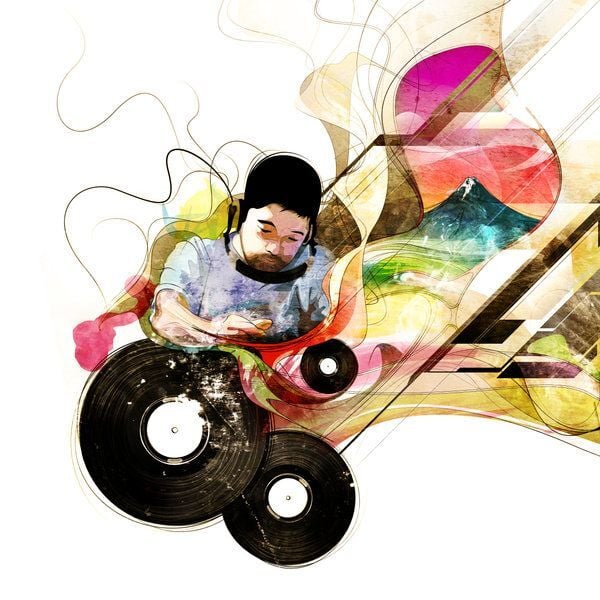
In Western Europe, producers like Melodiesinfonie, Tusken and FloFilz were making relaxing beats, becoming staples of mixes to come. In Japan, in the wake of Nujabes’ passing, producers and beatmakers like Ill Sugi and Tajimahal were leading the Lofi wave, the latter releasing beats on cassette on their label Hermit City. Ill Sugi and TajiMahal went B2B on a Worldwide FM show back in the day; their mix starts at 1:10:30.
As more people began working from laptops rather than offices, chill Hip-Hop beats began to change the soundtrack to working days forever.
The Latin rise
Bad Bunny may have cleaned up at this year’s Grammys but a decade ago he’d only released his first single ‘Soy Peor.’ He’s been able to run because figures like Daddy Yankee and J Balvin walked the Latin sound into global attention. 2016 was a turning point which even saw Pharrell singing in Spanish. By the end of 2016, Latin artists were appearing in the Global Top 100 regularly and, by 2018, dominated the same list.
The Reggaeton sound was becoming increasingly popular all over the world. Club night Reggaeton Party made history by becoming the first-ever Latin night to be hosted at Fabric, London’s iconic electronic music venue. Reggaeton was being mixed on high-energy dancefloors from Berlin to Sydney and Tokyo, showcasing its global reach.
Mixcloud in 2016
It’s always nice to look back along the road to see how we’ve travelled and the journey we’ve taken. In 2016, Mixcloud was run by a much smaller team and looked very different. I reached out to our CEO Nico to hear about what it was like 10 years ago.
“Oof! That feels like such a long time ago and at the same time so close that it’s hard to distinguish it as an era” Nico reflects. “It was also a year that validated Mixcloud’s mission.2016 was also a year when people really woke up to the volume of copyright takedowns on other platforms, and so came to Mixcloud appreciating the licensing stack that we had built to ensure song writers and artists got paid”.

1,000,000 Mixcloud creators
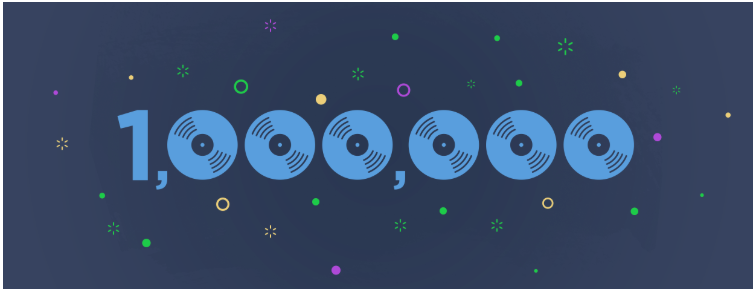
There were so many creators that discovered that their mixes were safe with us that we reached the huge milestone of a million unique creators. At that point, there were 10 million mixes to listen to, all on a platform run by around 15 people! It was a gratifying moment of realisation for Mixcloud that DJs out there wanted a place to share their mixes and support artists.

The rise and rise of global radio
2016 also coincided with a boom period for radio across the globe, as more stations and platforms emerged that continue to resonate with us. Xanthe, our Head of Marketing, who was Community Manager at the time, reflects on this movement. “2016 stands out to me as the year I started really digging into radio shows and bedroom curators from around the world via Mixcloud,” she says.
“At that time, listening to global radio was still quite a novelty so this was inspiring. Beats In Space Radio in New York featured interviews and guest mixes from a lot of the artists I was into. Red Light Radio in Amsterdam gave me a taste of the underground scenes there. The Music Is My Sanctuary shows curated by a man called Lexis in Canada (and still running), featured eclectic sounds and takeovers. There were so many more, it was a fairly recent explosion of online sharing.”
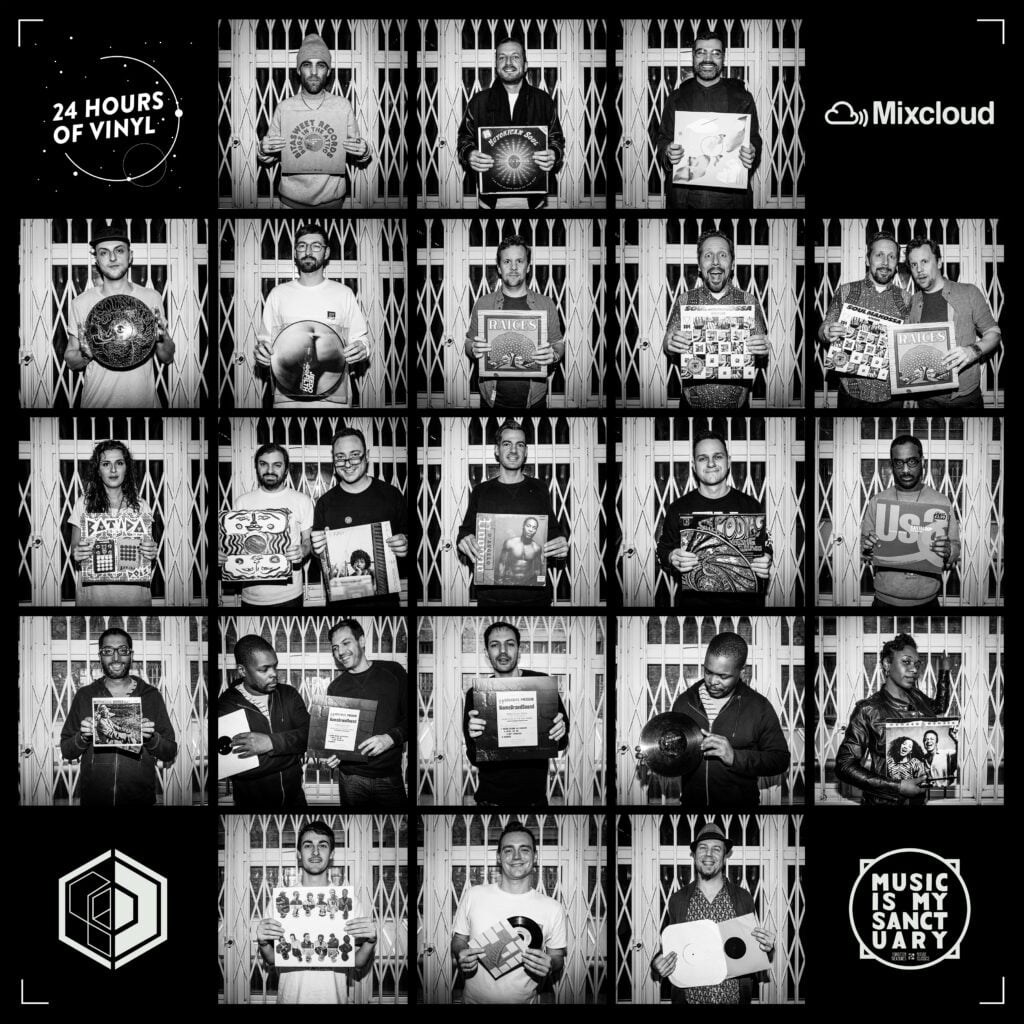
In 2016 we teamed up with Lexis from MIMS to throw a party in the Mixcloud office called 24 Hours of Vinyl, where we had DJs playing for 24 hours straight and live streamed the whole event. In DJ Simbad’s closing set, he took us on a journey from Disco to Afrobeat to Broken Beat to Hip-Hop, culminating in a jungle frenzy. Somehow he had the dancefloor going wild which was impressive as we’d all been awake for more than 24 hours. He recorded another mix at our office that same year.”

You used to call me on my cell phone
A culture that looks back to better times is clearly going through some things. But considering that the past 10 years have moved so quickly, I think we can be forgiven for taking time to consider what’s happened and the changes occurring around us.
Archives are special places. They allow us to take a break from the now and visit a different time. One with different ideals, tastes and sounds. They allow us to learn and ultimately become better people – better creators. Without the ability to look back on history we are doomed to repeat the mistakes of the past and aren’t able to learn from those that have paved the way for us. As Mixcloud lives on, the greater its purpose as a time capsule for music becomes more apparent.
Here’s to 2036.