


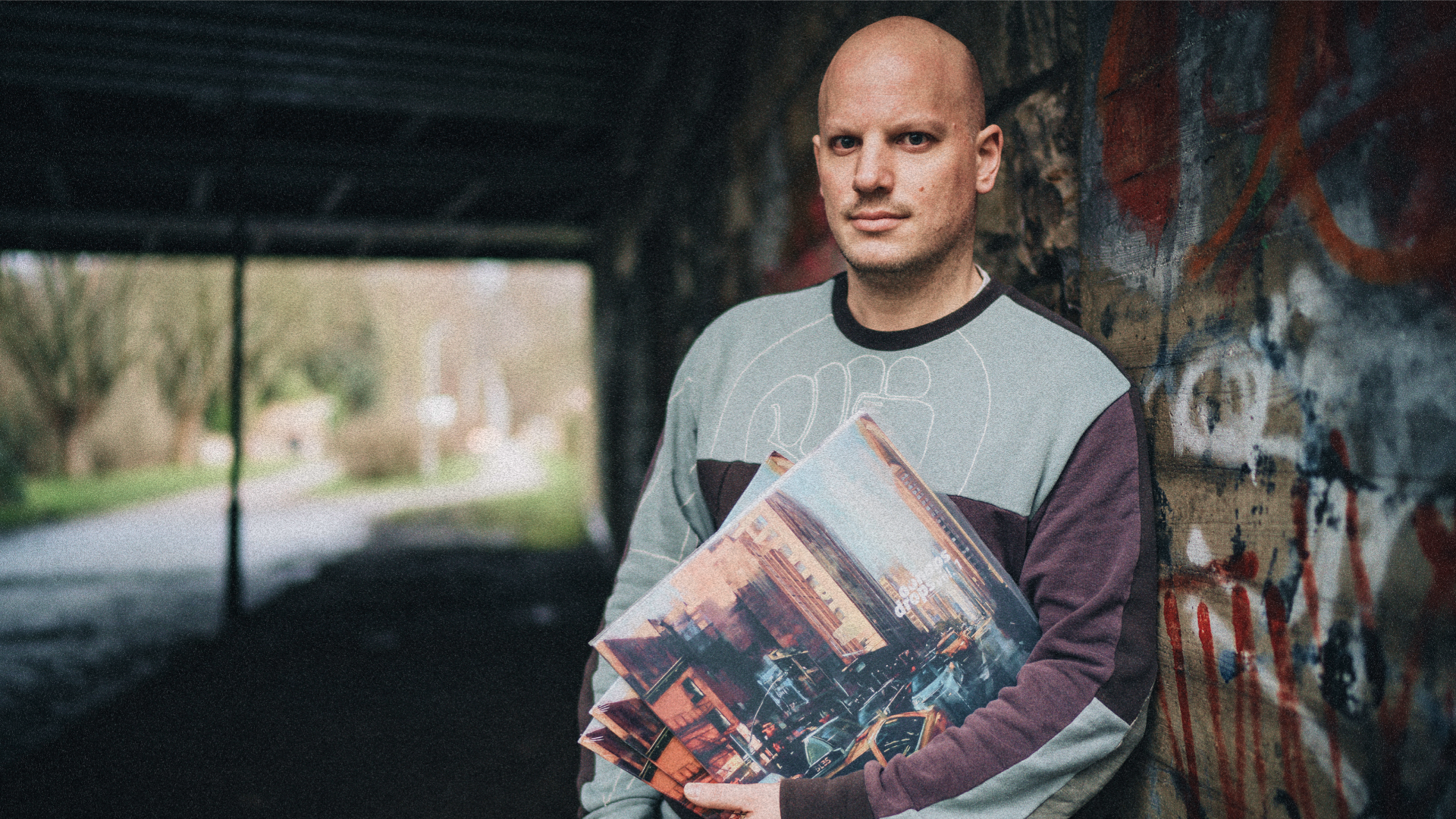
From the clubs and crates of Hanover, Germany, Patrick Decker — better known as Oonops — has spent over a decade building one of independent radio’s most distinctive and devoted followings. His monthly show ‘Oonops Drops’ has been a fixture on Brooklyn Radio since 2013, welcoming guests such as in his quest to build expansive musical worlds based on his taste. This April it reached a milestone worth celebrating: episode 200.
Part DJ, part selector, part digger, Oonops is known for his smooth mixing and a wildstyle that roams freely across Jazz, Soul, Funk, Hip-Hop, Beats, Techno, Dub and more. All strictly on vinyl. Far from your average radio show, ‘Oonops Drops’ forgoes talk and commentary in favour of music alone, weaving thematic episodes with exclusive guest mixes from artists around the globe. Two hundred episodes in, it’s a format that shows no signs of slowing down.
We sat down with Oonops to chop up his incredible achievement, the power of vinyl and the highlights of his radio career.
Contents
- 0.1 How did your journey with music get started?
- 0.2 How did you get your radio show?
- 0.3 What was it about radio that really attracted you to it?
- 0.4 What are some of the guiding principles of ‘Oonops Drops?’
- 0.5 What would you say was the one turning point for you in your radio journey?
- 0.6 What’s your process like when you’re preparing a show?
- 0.7 What is one radio show from your archive that you think defines you?
- 0.8 Tell us about what it means to get to 200 shows on Brooklyn Radio? How do you make sense of such an amazing achievement?
- 0.9 How do you plan on celebrating 200 shows?
- 0.10 What do you think are some of your proudest achievements in your radio career so far?
- 0.11 What would you say to someone who wants to present and put together a radio show?
- 0.12 What do you think the future of radio looks like?
- 0.13 What do you think you’ve learned about yourself through your radio show?
- 1 Share this:
How did your journey with music get started?
My journey began very early. I started playing the organ as a small child, sometimes very intensively until my teenage years. Therefore, I had already acquired profound musical knowledge and a feel for music. But during that time, I decided to pursue professional table tennis. Also during this era, I constantly recorded cassette mixtapes, mostly from MTV with theme-based interludes, be it from Star Wars, Bruce Lee or whatever came to mind. I started collecting music on vinyl but also on CD, MC or MD.
The love for vinyl-only started a little later. When I was studying biology and looking for a DJ name, I found the description of the house spider Oonops very fitting. Because I was still a bedroom DJ, I thought the spelling with the three o’s was pretty cool. Those who know my show know what JuJu from The Beatnuts thinks of it. The shout comes up quite often in my intros!
How did you get your radio show?
Around the year 2000, I stumbled into DJing, playing in bars and clubs. A DJ duo I knew took me under their wing and let me join them. Through a mixtape I put out, I then got two more resident gigs here in Hanover in quick succession, regularly playing at Bronco’s, the Calamari Moon Suite and 3Raum.
The more records I owned, the more mixtapes I started making. However, I didn’t want them to disappear into obscurity because I didn’t have a name yet. During my time as a designer, I regularly listened to Brooklyn Radio, where artists and labels like The Rub, Names You Can Trust, OBaH of Recycled Funk, DJ Chicken George (R.I.P.), and many more hosted their shows. That’s exactly what I wanted to be a part of, so I sent them a mixtape, which they then aired. After a total of three guest mixes, I got my own monthly show. Oonops led to the rhyming and fitting title name ‘Oonops Drops’ (which would later become my sustainable music label too).
What was it about radio that really attracted you to it?
I just wanted to be part of this Brooklyn Radio family. I really liked the musical range, and it perfectly reflected the kind of music I played. They have a loyal following, so my music was heard. The feedback I received inspired me even more, making it a lot of fun.
What are some of the guiding principles of ‘Oonops Drops?’
One of the show’s main features is that I don’t do any spoken introductions, explanations or announcements because I don’t feel comfortable with that. I simply want to let the music speak for itself. Relatively early on, I invited guests from all over the world and conceived the show as a mixtape-within-a-mixtape kind of show. Sometimes thematically coordinated and sometimes in a wild style, as an exciting journey for the listeners. I’ve got theme-based shows like ‘California Soul,’ ‘Smoky Jazz Session,’ ‘A Hip Hop Special’ or ‘Jazz’n’Beats’ to name a few.
What would you say was the one turning point for you in your radio journey?
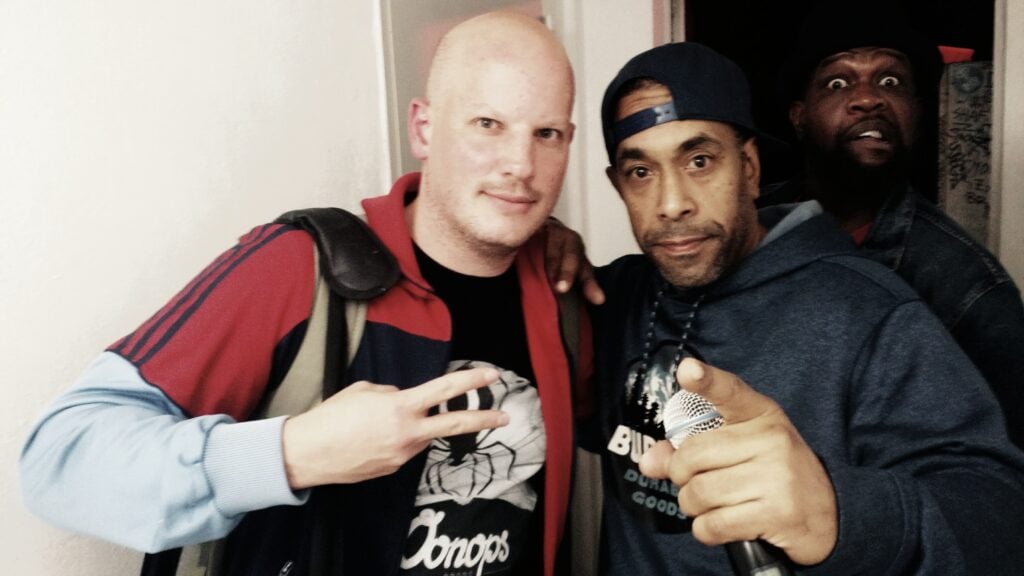
When my show gained more and more listeners and became my distinctive trait as a DJ. This was followed by vinyl releases like my OONOPS DROPS VOL. 1 through to VOL. 3 on Agogo Records, which reflect a cross-section of the music from my show in compilation form. I also built a very large network of artists, labels and producers, some of whom’s music I released through Agogo Records. This formed the foundation for the establishment of my own label in 2021. At this point, ‘Oonops Drops’ slowly began to become a kind of brand.

What’s your process like when you’re preparing a show?
For the past few years, each show has featured an average of two to three guests from all over the world. This requires a considerable amount of organization, especially since I usually plan the shows up to six months in advance.
I also receive a relatively large amount of promo vinyl, which I incorporate into my show. At first, I always look at which promos thematically fit which show and then check my crates to see how I can combine certain songs or moods. Unless they are theme-based episodes, which function and are selected differently.
Most of the time, the ideas for my shows come to me in my head during everyday life, when I’m out and about or listening to music. Inspired by this, I jot down songs that then make it into the selection. I’ll then record the show in one take, with complete post-production (including guest mixes), as well as info texts, tracklist, artwork and everything else that goes with it.
It’s very important to mention that the content of the radio show should not be confused with my live sets. I’m sometimes told (by bookers who don’t know me) that my music isn’t really suitable for clubs, but then they’ve only listened to my radio show and don’t know that I play, of course, differently in my sets. I don’t even play many of these songs on the show, but exclusively in live sets; it’s always good to be full of surprises.
What is one radio show from your archive that you think defines you?
That’s precisely the tricky part, because my show, like my live sets, can always vary depending on the setting or theme. A perfect show or vinyl DJ set for me, however, is a journey through different genres, from Hip-Hop and Beats to Jazz, Funk, Soul, Brazilian vibes, Boogie and even four-to-the-floor edits and remixes. I also love dropping Reggae, Dub, Drum & Bass and Jungle. Simply good music that moves people, without limits or restrictions. Sometimes I do specials on my own without guests about artists like the Beastie Boys, The Jacksons and NoRiginals.
Tell us about what it means to get to 200 shows on Brooklyn Radio? How do you make sense of such an amazing achievement?
It’s truly impressive how quickly time flies. I celebrated the 100th and 150th episodes in a slightly bigger way, but this one is really something special, as it’s being celebrated on several levels.
How do you plan on celebrating 200 shows?
I started the preparations nine months ago. I’ve invited many big names of the DJ scene like DJ Koco, Yo! Mafia, Coldcut and Robert Luis, Mirko Machine and Twit One, Spray, Ooedotech, Skeme Richards, Supreme La Rock and Sticky Dojah and many more. Due to the number of guests and to ensure the focus is not lost, I split it into three parts, which has never happened before in my show.
Thematically fitting is the new OONOPS DROPS VOL. 3 compilation, on which I’ve worked for over one year and will be released soon. A digital bonus track by the Japanese Jazz trio Nautilus, included on the compilation, will also be released physically as a 7-inch single on my label (which is also celebrating its 5th anniversary in April). Additionally, there will be a limited-edition cassette mixtape by Japanese mixmaster Shingo Takahashi. All of these are out now.
In parallel to the 200th jubilee episode, there will also be small release parties at cool locations like the Mojo Club in Hamburg, Backstein West in Leipzig, Koki in Hanover or at HHV Records in Berlin where I’m spinning vinyl.
What do you think are some of your proudest achievements in your radio career so far?
In general, I’m happy about every great show, about the guests who appreciate my work and therefore like to participate. About particularly successful and accidentally created transitions in live mixing that were not planned, newly discovered songs by guests, simply the little things.
It of course feels good when your radio station as well as well-known guests trust the quality of my show. After all, a certain professional routine develops after 13 years. Besides, I never would’ve expected that even a small guest mix from me, despite a few hiccups here and there, would result in a radio show that has been running for so long and where the audience knows what to expect (and looks forward to it).
“For radio, it’s all about supporting real people who take the time to curate music themselves.”
What would you say to someone who wants to present and put together a radio show?
Just do it. In the beginning, I was sometimes very analytical and unsure whether I could play one particular song after another. But over the years as a DJ, and with experience from my show, certain decisions became easier and more intuitive. One should even be a little bolder, especially when it comes to combining certain genres and tempos, because this also creates tension and breaks up what might already be a monotonous phase in the mix. But of course, you also need to have a feel for it, otherwise it can easily go wrong. Therefore, always try it out.
What do you think the future of radio looks like?
I think traditional FM/AM broadcasting could be declining more and more. The industry is reinventing itself through digital platforms, artificial intelligence and deep personalization. That is of course a broad field and a big topic, but I personally appreciate hand-selected good radio programs, be it traditional FM/AM or digital radio stations.
For cost reasons, more and more AI-generated songs will probably appear on the market, and the selection of songs will also be AI-driven, as an algorithm. This makes me very sad, but perhaps this emerging trend will disappear again. I see a positive counter-trend with my children: owning things physically and not being dependent on a stable internet connection, changing streaming offers or altered content (such as deleted scenes in movies). Buying vinyl, CDs and movies and creating one’s own individual collection to look at. For radio, it’s all about supporting real people who take the time to curate music themselves.
What do you think you’ve learned about yourself through your radio show?
In short: I think the show offers a great opportunity to engage with music and different perspectives, organize processes and procedures well, and break out of my introversion by meeting so many wonderful new people. Initially, you write to each other in the digital world, and then at some point you meet in real life, and it feels as if you’ve always known each other. That’s what’s really wonderful about this radio show experience.